
Fire Damage Restoration Help in St. Louis, MO
After a fire, your property may have smoke residue, soot, debris, odor, water from firefighting, and unsafe openings that need to be secured. Sansara 24/7 Restoration & Remodeling provides fire damage restoration in St. Louis, MO to help property owners move from emergency stabilization to cleanup, smoke damage restoration, odor removal, documentation, and repair planning. Once the property is safe to enter, our team can inspect the damage, explain the next steps, and begin the restoration process.
We are locally and family owned and based in Wildwood, and we answer the phone 24 hours a day. Call after the fire department has cleared the property, or as soon as it is safe for someone to assess it. If you are not sure whether it is safe to go back inside, ask the fire department first. We will not send a crew into a building that has not been cleared, and we ask that you stay out until it has been.
When you call, we will ask what burned, where the smoke traveled, whether the fire department used water, and whether any openings leave the property exposed. Your answers help us decide what to do first: securing the property, starting cleanup, or setting up an inspection.
Call (636) 812-3838 for fire damage help.
What Fire Damage Restoration Includes
A fire is rarely one problem. Most fire losses involve several at once: an unsecured structure, burned and wet materials, soot on surfaces far from the flames, and a smell that settles into everything. Fire damage restoration covers all of it in a sensible order, so you are not coordinating several companies on your own.
Depending on the property, the work can include:
Securing the property with emergency board-up when windows, doors, or walls are open
Removing debris, ash, and damaged materials through fire damage cleanup
Cleaning smoke and soot from walls, ceilings, and contents as part of smoke restoration
Finding and treating the source of lingering smell through smoke odor treatment
Extracting and drying water left behind by firefighting, using water mitigation
Moving, cleaning, and protecting your belongings with pack-out services
Planning and carrying out repairs, including reconstruction after a fire
Documenting the loss for your insurance company
Some fires need every step on that list. A small kitchen fire may need only cleaning and odor work, while a structure fire can need all of it, from board-up through rebuilding. We decide together after the inspection, and we tell you which parts of the job your property actually needs instead of selling you the whole list.
You will hear three words along the way. Cleanup removes damaged material and residue. Restoration cleans, dries, and treats what can be saved. Reconstruction replaces what cannot. We tell you which stage your property is in.
Emergency Board-Up and Property Stabilization
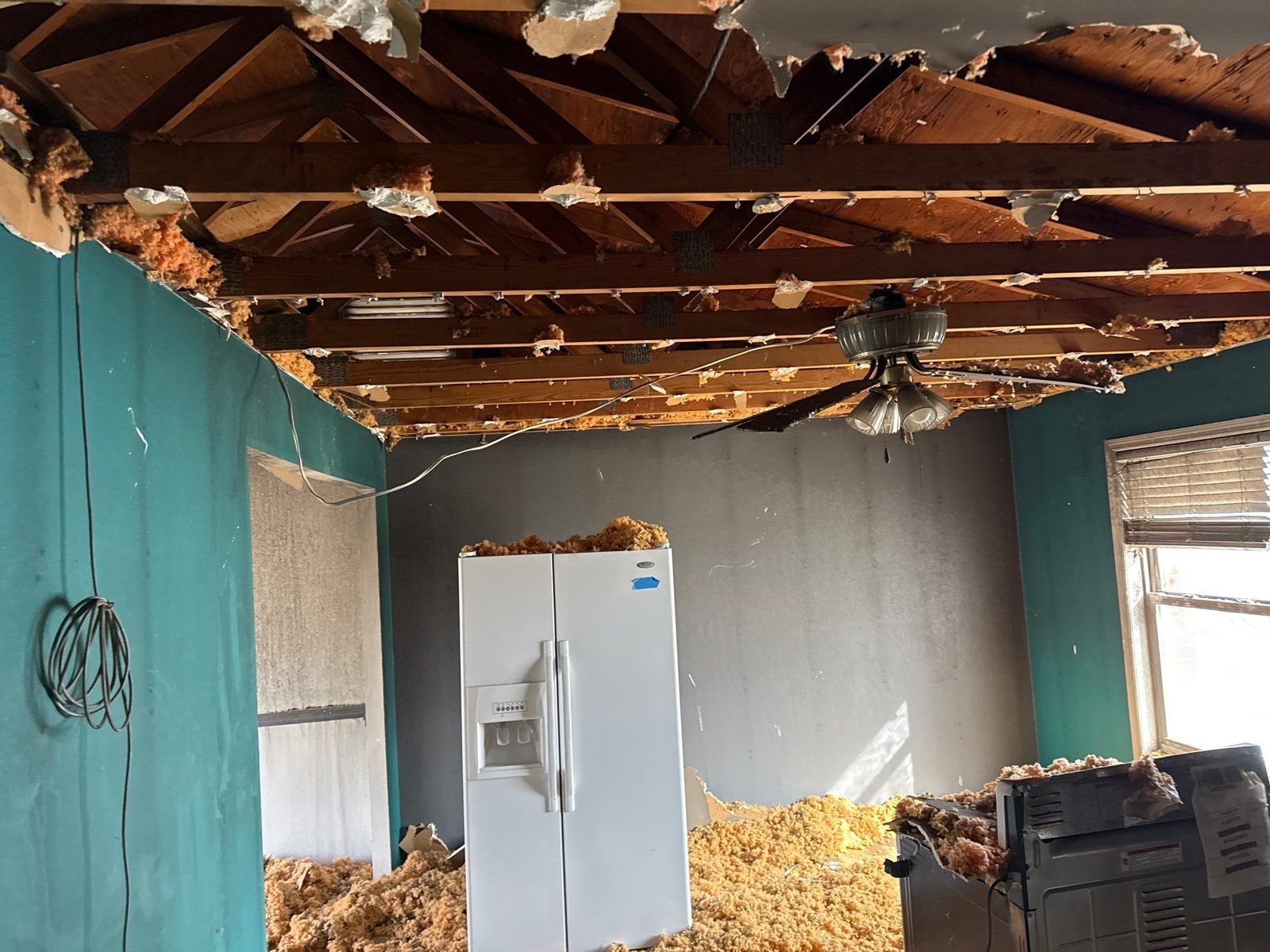
Fires and firefighting leave openings. Windows break from the heat, doors are forced so crews can get inside, and walls or floors can be cut or burned through. An open property is exposed to rain, wind, animals, and people who should not be inside, and that exposure adds damage on top of the fire.
Our board-up services secure windows, doors, and openings in walls with boards or panels, so the property is protected while cleanup and repairs are planned. Board-up is temporary. It keeps weather and unauthorized entry out, but it is not a permanent repair, and we talk with you about that next step. The same service is available after storms and break-ins.
Stabilization always depends on safety. If the structure has been weakened, if floors feel unstable, or if the fire department has not released the property, we wait until it is safe rather than put anyone at risk. Once we can work, we photograph the openings and the temporary protection, so you have a record of both.
If your property is open right now, call (636) 812-3838. We answer 24 hours a day.
Fire Damage Cleanup and Debris Removal
Once the property is safe, cleanup starts with removing what cannot stay: burned material, ash, debris, soot-covered items that cannot be cleaned, and materials ruined by firefighting water. What comes out depends on the scope we agree on with you after the inspection. We protect unaffected rooms where we can, so residue does not travel and turn a one-room loss into a whole-house one.
Please hold off on cleaning it yourself. Soot behaves differently from ordinary dirt. Wiping it with a wet cloth can smear it deeper into paint and porous surfaces. Touching it leaves prints that stain. Running a regular vacuum can push fine particles back into the air and into other rooms. The right method changes with the material and the type of residue.
Our fire cleanup work covers debris removal, ash, soot, and the removal of damaged materials, and it is planned around your specific property rather than a checklist.
Smoke Damage Restoration and Soot Cleaning
Smoke does not stay where the fire was. It moves through open doorways, up stairwells, and through wall cavities, and it leaves residue on surfaces in rooms that never burned. The work comes down to smoke and soot cleaning: finding where the residue went, cleaning each surface with a method that suits it, and treating the odor that follows.
Smoke Residue on Walls, Ceilings, and Contents
Soot settles on walls and ceilings, inside cabinets and closets, on window sills, and on furniture, clothing, and other belongings. A kitchen fire can leave residue in bedrooms down the hall or on another floor. The residue is not all the same, either. Dry soot from a fast, hot fire behaves differently than the greasy film left by a slow, smoldering one, and the residue from a kitchen fire can be almost invisible while still carrying a strong smell.
We assess the material, the residue type, and how heavy the exposure was before we choose a cleaning method, and we tell you when something is better replaced than cleaned.
HVAC, Airflow, and Cross-Contamination Concerns
If the heating and cooling system was running during or after the fire, it can carry smoke and soot to rooms far from the damage. Do not turn on an HVAC system that may have pulled in smoke, since running it can spread residue through the house. During the inspection we look at how air moved through the property, including returns, vents, and the paths smoke could have taken between rooms.
We also offer air duct cleaning, and whether the ducts need it after a fire is a decision we make with you based on what we find, not something we assume.
Smoke Odor Removal After a Fire
Smoke odor does not disappear just because the visible soot has been cleaned. Odor removal starts with the source: taking out burned or smoke-soaked materials that cannot be cleaned, then cleaning the residue that remains. Only after that does treating the air and surfaces make sense.
Odors can stay in porous materials such as carpet, drywall, insulation, and upholstery, in cabinets and unfinished wood, in clothing and other textiles, and along HVAC pathways. Sprays and air fresheners cover the smell for a while, and then it comes back. Our smoke odor removal work follows the source first, which is why the result depends on what is left in the building. We cannot promise every smell will disappear, and we tell you plainly when a material will need to be replaced instead of treated.
Water Damage From Firefighting
Putting out a fire takes a lot of water. Hose lines and sprinkler systems can saturate floors, walls, ceilings, insulation, cabinets, and belongings, sometimes on the floors below the fire. That water has to be found and dried. Materials left wet can swell, warp, and start to break down within days, and the damp conditions can lead to mold.
We inspect for moisture with moisture meters and thermal imaging, remove standing water, and set up drying equipment. Our water damage restoration work covers that process in full. Water used to fight a fire can also pick up ash, soot, and debris on its way through the building, so we take that into account when deciding which materials can be dried in place and which need to come out.
If a sprinkler system went off, fire sprinkler water damage has its own considerations, such as how far the water traveled. If wet materials have already started to smell musty or show growth, we can handle mold remediation as a separate step once the water is dealt with. We cannot promise mold will not develop, since that depends on how long materials stayed wet and what they are made of.
Fire Restoration Process: From Inspection to Repairs
Every fire is different, but the sequence is usually the same. Here is how a typical job moves forward.
Damage Assessment and Safety Review
We start once the property is safe to enter, meaning the fire department has released it and nothing about the structure looks unstable. We walk the property with you and document visible fire damage, smoke migration, water damage, structural concerns, and the condition of your contents with photos and notes. If we see something that needs someone else's review first, such as damaged framing, an electrical hazard, or materials in an older building that call for special handling, we stop and tell you so the right specialist can look before anything is disturbed. That assessment becomes the plan for the job.
Stabilization and Cleanup
Stabilization comes first. We board up openings, remove debris, start drying wet areas, and set up containment where smoke and soot could spread into clean rooms. Cleaning then follows the plan built from the assessment, so the order of rooms and materials is decided, not guessed.
Smoke, Soot, and Odor Treatment
We clean surfaces, remove the sources of odor, and decide with you what happens to your belongings. Contents that can be cleaned may go through pack-out, where we inventory, pack, move, and clean them. Items that cannot be saved are documented before they are discarded. Odor treatment comes after the source is gone and the residue is cleaned, and we check the results before we call that stage finished.
Repair and Reconstruction Planning
When the property is clean and dry, we talk through what needs to be repaired or rebuilt. Some fires need only paint and small repairs. Others need drywall, flooring, framing, or larger rebuilding work. Our reconstruction services handle that work, so the team that cleaned your property can help plan what comes next. We walk through the scope with you and provide a free estimate.
Residential and Commercial Fire Damage Restoration in St. Louis, MO
We restore fire and smoke damage for homeowners, landlords, and business owners across the area, and the process stays the same whatever the building is: safety first, then a documented plan.
We serve properties throughout our service area: St. Louis City; St. Louis County, including Chesterfield, Town & Country, Wildwood, Ladue, Ellisville, Ballwin, Clayton, and Clarkson Valley; St. Charles County, including St. Charles and O'Fallon; Jefferson County; Franklin County; and Monroe County, Illinois.
Homes, Apartments, Condos, and Rental Properties
We work in single-family homes, apartments, condos, and rental properties. Homeowners get a plain explanation of each step. For landlords and property managers, we keep communication clear about scope and progress and we document the condition of each affected unit, which matters when several people are waiting on answers. If tenants are affected, tell us early so we can plan around it.
Commercial Buildings and Businesses
A fire at a business brings its own pressures, including records of the loss and decisions about when parts of the space can be used again. We work in phases and explain what each phase involves so you can plan around it, and we document the loss at every step for your own records and for your insurance company. Safety works the same way as it does in a home. We do not start until the property has been cleared.
Fire and smoke cleanup at a workplace is part of our commercial restoration services.
Insurance Documentation for Fire Damage Restoration
Most fire losses involve an insurance claim, and a claim goes better with good documentation. As part of the job, we document damaged rooms and materials, smoke and soot conditions, moisture from firefighting, and the scope of work we propose. That record includes photos, notes, inventories of affected contents, moisture readings, and an itemized scope.
The record is yours to share with your adjuster, and we work with your insurance company to answer questions about our documentation and the scope of our work. We cannot tell you whether your policy covers a fire loss, and we cannot guarantee that a claim will be approved or paid. Those decisions belong to you and your insurer. What we can do is make sure you have clear records to bring to that conversation.
Call Sansara 24/7 Restoration & Remodeling for Fire Damage Restoration in St. Louis, MO
If your property has fire, smoke, soot, odor, or water damage, call Sansara 24/7 Restoration & Remodeling for fire damage restoration in St. Louis, MO. We can inspect the affected areas, secure openings if needed, begin cleanup, document the damage, and guide you through the next steps for smoke restoration, odor removal, and repairs.
We are locally and family owned, fully insured, and BBB Accredited with an A+ rating, and we answer the phone 24 hours a day. Estimates are free.
Call (636) 812-3838 to get started. If the situation is not an emergency, you can request an inspection online.