
Emergency Water Damage Restoration in St. Louis, MO
When water damages your home or business, the first priority is stopping the spread, removing standing water, and starting controlled drying before the damage gets worse. Sansara 24/7 Restoration & Remodeling provides water damage restoration in St. Louis, MO for burst pipes, flooding, appliance leaks, sewage backups, storm water, and hidden moisture problems. Our team inspects the affected areas, begins water mitigation, documents the damage, and builds a restoration plan for your property.
We answer the phone every hour of every day, and when you call, we get a crew moving. Whether the water came in ten minutes ago or has been sitting since the weekend, the goal is the same: get it out and dry what is left.
We respond to:
Active leaks and running water
Standing water on floors, in basements, or in crawl spaces
Saturated flooring, carpet, and carpet pad
Wet or bulging drywall and stained or sagging ceilings
Musty odors that show up after a leak or flood
Stopping the source comes first. If you can reach the main shutoff valve safely, close it, and stay out of any area where water is touching outlets, cords, or the electrical panel. Repairing a broken pipe, fixture, or roof is plumbing or roofing work, and those are trades we do not perform, so the source may need a plumber or a roofer. We handle everything tied to the water damage.
Water spreading through your property right now? Call (636) 812-3838 for emergency water damage help in St. Louis and the surrounding area.
What Water Damage Restoration Includes
Water damage restoration covers more than drying out one wet room. A full job moves through several stages, and we handle each one so you are not coordinating multiple companies.
Our scope of work includes:
Moisture detection and a full water damage inspection to find both visible and hidden water
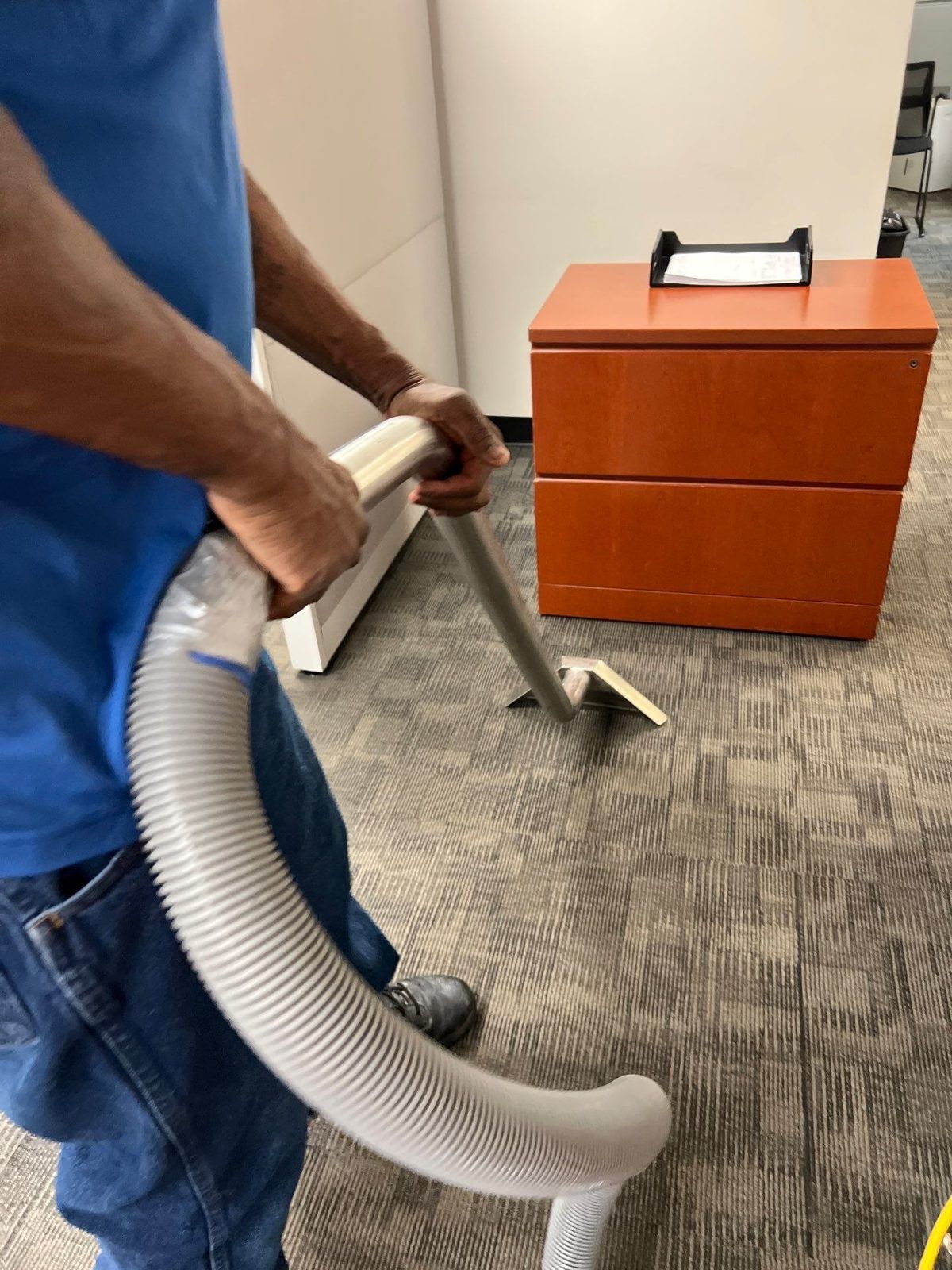
Removal of standing water through water extraction from floors, carpet, basements, and crawl spaces
Emergency water mitigation to stop the damage from spreading into more materials
Controlled structural drying and dehumidification for walls, subfloors, cabinets, and framing
Cleaning and sanitizing of affected surfaces
Protection for your belongings, including pack-out services that inventory, pack, move, and clean contents when a room has to be emptied
Coordination with our reconstruction services once the structure is confirmed dry
Cleanup and repair are two different things. Our water damage cleanup removes wet and damaged material and gets the space ready for the next step. Repair, such as replacing drywall, flooring, or cabinets, comes after the structure is verified dry, and we tell you which phase your property is in.
Common Water Damage Problems We Restore
Water finds its way into St. Louis-area homes and businesses in many different ways. These are the situations we restore most often, and each one changes how we plan the job.
Burst Pipes and Plumbing Leaks
Broken supply lines, burst pipes behind walls, and slow leaks under sinks are some of the most common calls we take, and the water often travels farther than it looks. Our burst pipe cleanup covers pulling the water out, opening and drying affected walls and floors, and documenting the loss. A pipe that split in a cold snap or a break on the main line into the house moves more water faster, and we cover those under frozen pipe water damage and main water line break.
When the source is hidden, we use moisture meters and thermal imaging to trace where the water traveled, the same first step as water leak detection. The pipe repair itself goes to a plumber. We handle the water damage.
Appliance Leaks and Overflows
Washing machines, dishwashers, refrigerators and ice makers, water heaters, and overflowing bathtubs or toilets account for a large share of the water damage we restore. These leaks are often slow, so water can sit under cabinets or flooring for days before anyone notices. We check for hidden moisture in the surrounding materials, not just the spot where the leak happened. That is how our appliance leak cleanup works, and a toilet overflow cleanup or bathtub overflow cleanup adds one more check, because water from an upstairs bathroom often reaches the ceiling and walls below.
Flooding and Storm Water
Heavy rain, sump pump failure, and water entering through foundations or window wells can flood lower levels fast. Storm-driven flooding often brings in more debris and contamination than an indoor leak. Our flood damage restoration covers the extraction, drying, and debris removal for that kind of loss. Basement flooding and crawl space flooding each need their own approach because of how those spaces are built, and sump pump failure cleanup starts with getting water out before it reaches finished walls and stored belongings.
Sewage Backups and Contaminated Water
A sewer backup or a backed-up floor drain brings water that can carry bacteria and other contaminants, which changes the safety precautions and the materials that need to come out. It should not be cleaned up with household tools. Our sewage cleanup covers these losses with protective equipment, removal of porous materials that cannot be cleaned safely, and thorough cleaning and sanitizing of what stays.
Our Water Mitigation and Restoration Process
Every job starts with a plan built around your property and your water source. The emergency phase of that plan is water mitigation, the work that stops the damage from spreading before anything else is decided. Here is how it comes together.
Inspection and Moisture Mapping
We start by identifying which materials are affected, how far the moisture has traveled, and whether there are safety hazards. Our technicians use moisture meters and thermal imaging to find water that is not visible yet, behind walls, under flooring, and inside cabinets. We record readings room by room, which gives us a moisture map for the drying plan. A water damage inspection is the first step on every job, and it decides how long drying will take and which materials can stay.
Water Extraction
Once we know where the water is, we remove standing water from floors, carpet, crawl spaces, basements, and any other affected rooms. Extraction equipment pulls water out quickly, which limits how far it spreads into subfloors and framing. Faster water extraction also means less drying time later, since every gallon we remove is a gallon that does not have to evaporate out of your building materials.
Drying, Dehumidification, and Monitoring
With the standing water gone, we set up air movers and dehumidifiers to dry what is left, including moisture inside walls, under cabinets, and in flooring. We check moisture levels at every visit and adjust equipment as materials dry at different rates. Drying often takes several days, depending on what was wet and how wet it got. That monitoring is the core of our structural drying, and it continues until the readings show the materials have dried.
Cleaning, Sanitizing, and Restoration Planning
Once materials are dry, we clean and sanitize affected surfaces based on the water category and what those surfaces came into contact with. Then we talk through what comes next. Some properties need only cleaning and drying. Others need drywall, flooring, trim, or cabinet replacement, and because we also handle reconstruction, we can plan that rebuild with the drying records in hand.
Structural Drying and Moisture Control
Drying a water-damaged property is not the same as removing the water you can see. Moisture can stay in drywall, insulation, subfloors, cabinets, trim, carpet pad, and framing long after the surface feels dry, and that hidden moisture causes problems weeks later, from warped flooring to musty odors to mold. We treat drying as its own phase, with a drying goal for each material, moisture readings at every visit, and records showing the materials reached a normal moisture level before we call the job finished.
Wall, Floor, and Cabinet Drying
Many walls, floors, and cabinets can be dried in place with the right equipment and enough time, which saves you the disruption of tearing them out. Materials that sat saturated for a long time or were exposed to contaminated water, and wet insulation, usually need to come out so we can dry the framing behind them. We cannot tell you which group your materials fall into until we have inspected them, so we do not promise that any material can be saved sight unseen. We will show you the readings and explain why we recommend drying in place or removal.
Category 1, Category 2, and Category 3 Water Damage
Not all water damage is the same, and the source of the water changes how we approach the job. Restoration professionals group water into three categories, and we use them to decide which materials can be dried and which must be removed.
Category 1 Water
Category 1 water comes from a clean source, such as a broken supply line or an overflowing sink with no contaminants in it. It is the least hazardous category, but conditions change. Clean water that sits too long, or picks up dirt from the materials it touches, can move into a more serious category, which is one more reason to call early.
Category 2 Water
Category 2 water, often called gray water, carries some contamination. It includes discharge from washing machines and dishwashers and some toilet overflows where the water is only lightly contaminated. It calls for more careful cleaning and more decisions about which materials can stay, especially porous materials such as carpet and pad.
Category 3 Water
Category 3 water is heavily contaminated. It includes sewage, floodwater, and water that has picked up hazardous material on its way into your property. It requires protective equipment, careful handling, and removal of porous materials that cannot be cleaned safely. If your loss involves a sewer backup, our sewage cleanup handles it specifically, and floodwater after a storm follows the same rules under flood damage restoration.
Water Damage, Mold Risk, and Indoor Air Concerns
Moisture control is the main thing standing between a water-damaged property and a mold problem. Mold needs moisture to grow, and the longer wet materials sit, the higher that risk climbs. Fast extraction and thorough drying reduce the conditions mold needs, but we cannot promise mold will not develop in every situation. That depends on how long materials were wet and what they are made of. If you see visible mold, notice a musty smell that does not fade as things dry, or suspect growth inside a wall, our mold remediation team can take a look and handle it as a separate scope from the water damage work.
Residential and Commercial Water Damage Restoration in St. Louis, MO
We restore water damage across our service area, which includes St. Louis City, St. Louis County, St. Charles County, Jefferson County, Franklin County, and Monroe County, Illinois.
Homes, Condos, Apartments, and Rental Properties
We restore water damage for homeowners, condo owners, and rental properties. Water in one unit often affects the unit below it, so we check adjoining spaces and tell you what we find. For landlords and property managers juggling tenants, we keep you updated on scope and timeline and explain which rooms can stay in use while drying equipment is running.
Commercial Buildings and Facilities
We restore water damage in businesses as well as homes. On a business loss we focus on containing the affected area so the rest of the building can keep running where it is safe to do so, documenting the loss clearly, and talking with you about scheduling so the work interrupts your operations as little as possible. Tell us what has to stay open, and we build the plan around it.
Water damage at a workplace is part of our commercial restoration services for offices, showrooms, restaurants, and other businesses across the St. Louis area.
Insurance Documentation for Water Damage Restoration
Many customers need documentation for their insurance company. On every job we document the affected areas with photos, moisture readings, drying records, and an itemized scope of the work. That record is yours to share with your adjuster, and we work with your insurance company by answering questions about what we found and did.
We cannot tell you whether your policy will cover the loss, and we cannot guarantee a claim will be approved. Coverage depends on your policy and the cause of the loss, and that is a conversation between you and your insurer. You can call us before you talk to your insurance company. Starting extraction and drying quickly limits further damage, and the photos we take at the start capture the condition of the property before that work begins.
Call Sansara 24/7 Restoration & Remodeling for Water Damage Restoration in St. Louis, MO
If water is spreading through your property, do not wait for it to dry on its own. Call Sansara 24/7 Restoration & Remodeling for water damage restoration in St. Louis, MO. We inspect the damage, remove the water, start drying, and help you understand the next steps for cleanup, documentation, and repairs.
We are a locally and family owned company based in Wildwood, we are fully insured, and we are BBB Accredited with an A+ rating. We answer every call at any hour, and estimates are free. Call (636) 812-3838, or use our contact form if the situation is not an emergency.