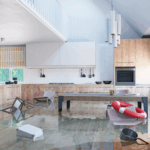
St. Louis is a city defined by its history, and our homes reflect that. Whether you are in a historic brick bungalow in South City or a sprawling updated estate in Webster Groves or Kirkwood, these houses are built in layers. We see new hardwood over original pine subfloors and finished basements tucked under foundations that have stood for a century. While this gives our neighborhoods character, it creates a “hidden map” for water to follow the moment a pipe bursts or a storm hits.
The Deceptive Nature of “St. Louis Layers”
When water enters a local home, it doesn’t just sit on the rug. It hunts for the gaps between those generations of building materials. In our experience at Sansara 24/7 Restoration & Remodeling, we often find that moisture has traveled along old floor joists or tucked itself behind the finished walls of a basement long before a single spot appears on your drywall.
The structure of a St. Louis home quietly redirects the problem. What looks like a small, damp section of carpet is often the “endpoint” for water that has already soaked into subfloors, traveled behind custom cabinetry, or saturated the insulation in an adjoining room. The real challenge isn’t just drying what you see—it’s mapping where the water has already been.
Why Our Local Materials Hold Onto Moisture
The way we built homes in St. Louis decades ago plays a huge role in how they handle water today. We have a lot of dense, high-quality materials:
- Plaster Walls: Much thicker than modern drywall, plaster absorbs water like a sponge and releases it very slowly.
- Hardwood and Masonry: These materials are durable, but once saturated, they “lock” moisture within their cores.
- Finished Basements: In many St. Louis neighborhoods, the basement is a primary living space. When water seeps in, it hits a complex mix of drywall, studs, and flooring all at once.
Even after we pump out the standing water, the humidity stays high. As these heavy materials slowly “off-gas” the moisture they’ve trapped, the air becomes heavy. You might notice the house feels dry in the kitchen but “clammy” or damp in the den. That is because the structure hasn’t stabilized yet; it is still holding a reservoir of water deep inside the wood and masonry.
Restoring the Core, Not Just the Carpet
True restoration in a St. Louis home is a deliberate process. If you only dry the surface quickly, you leave those deeper layers wet, which is a recipe for long-term rot or mold. We focus on changing how the house interacts with the moisture.
Opening the “Trapped” Zones
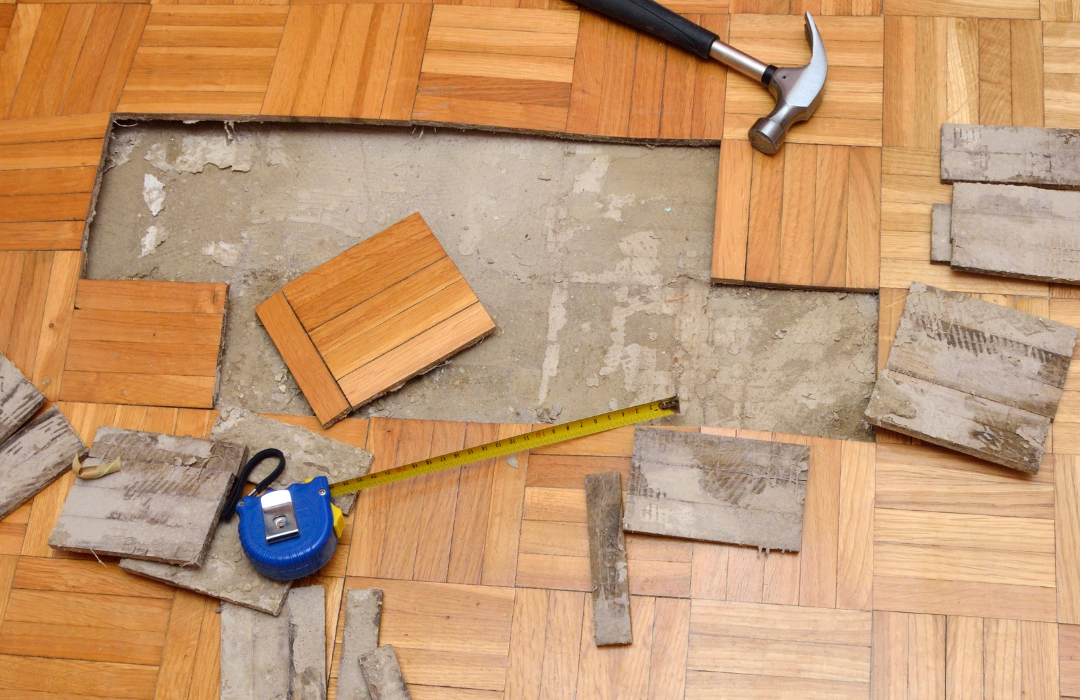
To get a house truly dry, we have to give that moisture an exit strategy. This often involves opening up small sections of the affected areas—not just to tear things out, but to finally allow the “hidden” framing and subfloors to breathe.
Achieving Structural Balance
Once we have access, we use a two-pronged approach:
- Directed Airflow: We force air into spaces that were previously sealed off, such as the cavities behind your baseboards or under the stairs.
- Deep Dehumidification: We remove water from the air and structural materials simultaneously.
When is the Job Actually Done?
In the St. Louis climate, a home isn’t “dry” just because the floor feels fine under your socks. It is dry when the core of the materials—the studs, the subflooring, and the masonry—reaches its natural balance.
At Sansara 24/7 Restoration & Remodeling, we know a home has moved past the damage when the indoor environment no longer shifts. When the humidity is consistent from the attic to the basement and the materials are dry at their core, your home is back in balance.