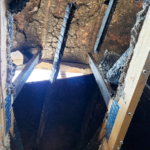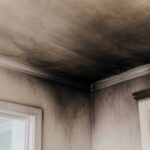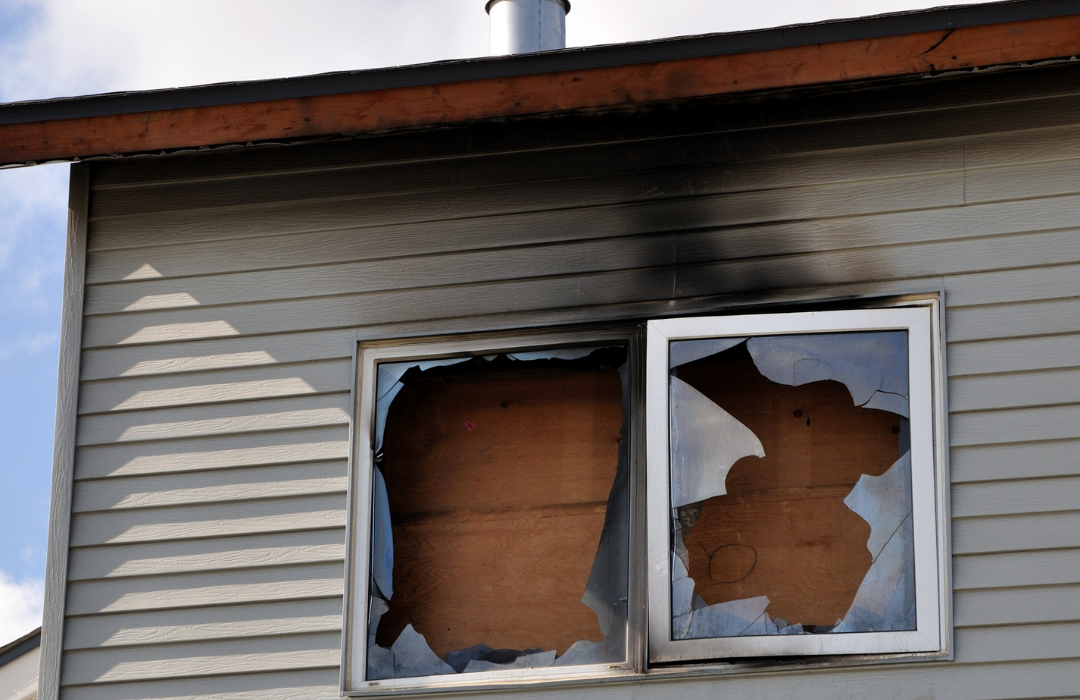
A kitchen grease fire or electrical fire can cause damage that goes well beyond burned walls and cabinets. Hot gases carry acidic soot through ducts and wall framing, coating studs, joists, and ceilings throughout the home.
In Chesterfield and nearby Ladue, recovering from a house fire means knowing how heat, acidic soot, and firefighting water affect the inside of your home’s structure.
Soot Residue Damages Walls, Ceilings, and Building Materials
Fires leave behind different kinds of residue based on what burns and how much oxygen is present. Synthetic materials like foam furniture and plastic electronics create sticky soot that sticks to framing. Cooking oil fires leave thin, nearly invisible grease that soaks into drywall and wood trim.
Trying to clean soot-covered walls with regular cleaners can push acidic particles deeper into paint and drywall, leading to stains and lasting odors. Professional restoration uses the right chemical neutralizers and dry sponges for each type of residue.
Water from firefighting makes things even more complicated. If framing timbers soak up this water, they can swell, warp, and grow mold unless strong dehumidifiers are used right away along with soot removal.
Fire Damage Restoration
Restoring a building after a fire takes careful planning and step-by-step work. Technicians start by securing the building in St. Louis, boarding up broken windows and covering roofs to keep out the weather.
Standing water left by firefighting is removed with powerful pumps. Commercial dehumidifiers keep indoor humidity in check to prevent wood from warping and mold from growing. Dry soot sponges pick up loose soot before any wet cleaning starts. Wall cavities are then cleaned, disinfected, and sealed to eliminate trapped odors.
Learn more about our fire damage restoration services.
Smoke Odor Cleanup and Removal
Using scented sprays or sealers to cover smoke odors does not work because smoke gases go deep into the wood. When indoor temperatures change, trapped smoke can come back out and cause bad smells again.
To fully remove smoke odors, the compounds must be broken down at the molecular level. Hydroxyl generators use ultraviolet light to neutralize these compounds safely. Thermal fogging sends neutralizing agents deep into studs and subfloors, following the same path as the smoke. This process gets rid of smoke odors for good, not just for a short time.
Reclaiming Your Home Environment
Good fire damage restoration does more than fix how things look. It keeps the structure strong and the air clean. Careful cleaning helps homeowners safely use their spaces again.
If your property has fire or smoke damage, you can rely on the experienced team at Sansara 24/7 Restoration & Remodeling. Call us at (636) 812-3838 to begin your recovery and set up a structural assessment.