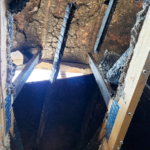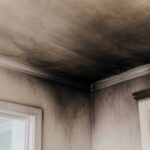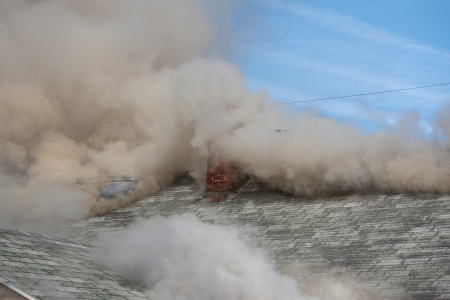
Most people do not realize this until they see a home after a fire: the main work is rarely in the room where the fire started. Smoke travels through wall cavities, staircases, and every gap in the framing, reaching rooms that look untouched. In older St. Louis homes, these pathways are common. By the time the fire is out, smoke residue and odor can spread throughout the entire house, even into areas that never got warm.
What Makes St. Louis Construction Harder to Restore After a Fire
Many St. Louis neighborhoods have homes built between 1890 and 1960, and these houses are still lived in throughout the city and in places like Ladue and Chesterfield. The building methods of that time, especially balloon framing and old plaster-and-lath walls, make fire damage restoration more complicated than with modern homes.
Balloon framing uses wall studs that run from the foundation to the roof, without fire blocks between floors. When smoke gets into a wall cavity in a balloon-framed St. Louis home, it can move easily from the basement up to the attic. We have seen kitchen fires cause heavy smoke in the attic above the second floor, while the second floor itself had much less smoke. This is how balloon framing works, but with smoke instead of air.
From what we have seen, contractors who are unfamiliar with historic St. Louis homes often miss this problem. They clean what they can see, use a deodorizer, and say the job is finished. But the smell comes back in a few weeks because the real source was not fixed.
How Smoke Residue Works and Why It Requires Professional Treatment
Smoke residue is not all the same, and what burned affects what you are dealing with. Wet, sticky residue from slow fires is the hardest to clean and can leave stains if not handled right. Dry, powdery residue from fast fires spreads farther before settling. Protein residue from kitchen fires is almost invisible but leaves a strong odor that many homeowners say gets worse over time.
We have seen St. Louis homeowners try to clean up fire damage themselves with store-bought products, but this often pushes residue deeper into walls and other surfaces. Professional fire damage restoration uses specialized sponges, cleaning solutions with the right pH, and treatments such as thermal fogging or ozone to remove smoke odors rather than just covering them thoroughly. The process is careful and takes time. It cannot be done properly in just a day or two.
Contents Restoration After a Fire
People often overlook what happens to a home’s contents after a fire. Furniture, clothes, documents, artwork, and personal items outside the burn zone can still be affected by smoke and odor. Restoring these items is a special part of our work, and it is very important to the homeowners we help in St. Louis, Chesterfield, Ladue, and the surrounding area.
We start by making a list of affected items, then pack them up and move them to a climate-controlled facility. Textiles are specially laundered. Hard surfaces are cleaned using the right methods for each material. Certified technicians check electronics, since soot can cause them to fail weeks or months later. Books and documents may be freeze-dried to stop further damage. Removing smoke odor from personal items takes the same careful approach as treating the structure. We also help homeowners with the detailed paperwork needed for insurance coverage on contents.
Structural Assessment After the Fire Is Out
After a fire, structural issues are not always visible. Heat can weaken lumber even if it is not charred. Old plaster-and-lath walls can separate from the structure after rapid heating and cooling. Masonry chimneys in older St. Louis homes often crack or lose mortar during a fire, even if you cannot see it from the outside. Any of these problems can be safety risks during restoration if they are not found early.
We do a full structural assessment before any rebuild work begins. That step protects our crew, the homeowner, and the integrity of the finished restoration. After working on many fire jobs in and around St. Louis, we know which structural elements to inspect carefully and which indicators to watch for in older local construction.
One Team From Emergency Board-Up Through Final Reconstruction
Dealing with a fire is already an enormous disruption. One thing that makes it worse is being handed off among multiple contractors, adjusters, and project managers who do not communicate with each other. Sansara 24/7 Restoration and Remodeling handles the full process, from initial emergency board-up and fire-damage cleanup through structural repairs and final reconstruction. You can see what St. Louis area homeowners have said about working with us on our Google Business listing.
If you are dealing with fire damage anywhere in the St. Louis metro area, including Chesterfield and Ladue, do not wait to call. The longer smoke residue sits on surfaces, the more permanent the damage becomes, and the harder smoke odor removal becomes. We are available around the clock for exactly this reason.
Related: Addressing Smokey Materials During St Louis Fire Damage Restoration