Commercial Restoration Services for Occupied Facilities in St. Louis, MO
When water, fire, smoke, mold, or a storm damages a commercial building in St. Louis, MO, the job is bigger than cleanup. The building has to be stabilized, people kept out of affected areas, contents protected, and the damage documented while your business keeps going as much as conditions allow. Sansara 24/7 Restoration & Remodeling provides commercial restoration services for offices, showrooms, restaurants, fitness facilities, and other commercial and managed properties across the St. Louis area.
We handle the job from the first call through the rebuild. We cannot promise every building stays fully open while we work, but we plan to reduce disruption where conditions allow and tell you plainly which areas need to close.
We get commercial calls about:
Burst pipes, sprinkler discharge, and roof leaks
Fire, smoke, and soot damage
Mold behind walls or above ceilings
Storm damage that let water in
Active damage at your business? Call (636) 812-3838. We answer 24/7.
Commercial Damage Assessment When Property Damage Disrupts Operations
Active water, a discharged sprinkler, a roof leak, fire or smoke damage, a mold concern, a storm-opened wall, or an unsafe area all call for the same first step: a site assessment. We answer 24/7 and get a crew moving. We look at where the damage came from, what is affected, and what is safe to enter, then walk the decision-maker through a plan for stabilization and mitigation.
Stabilize The Building And Reduce Secondary Damage
Secondary damage is what follows the first event: water wicking up drywall, moisture spreading under flooring, soot settling, or rain coming through an uncovered opening. Stabilization stops that spread. Depending on the loss, we extract standing water, set up drying equipment, isolate the affected area, and board up broken windows or doors. A broken pipe or a damaged roof goes to a plumber or a roofer. We handle the damage the water caused.
Coordinate Access, Occupant Safety, And Communication
Commercial buildings come with people, schedules, and rules. Before work starts, we ask who makes decisions, how our crew gets in, which areas staff, customers, or members still use, and where equipment can run. We mark off work zones and keep people out of them. Whether part of the building can be occupied is for the owner or the building's responsible contact to decide.
Commercial Restoration Services We Provide
Each type of damage needs its own assessment and its own plan. Here is the commercial work we handle most often, and what each job usually involves.
Commercial Water Damage Restoration
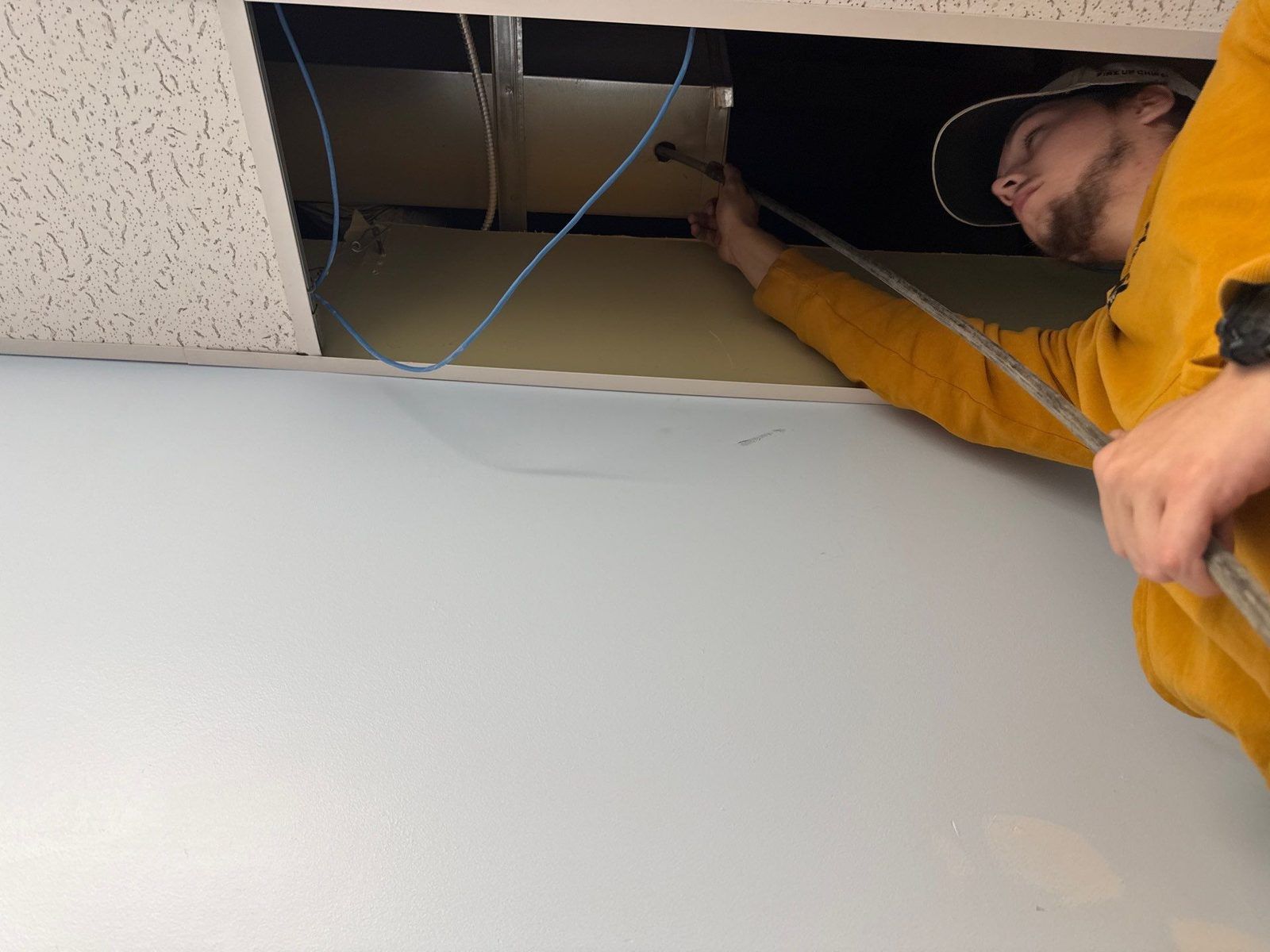
Burst pipes, roof leaks, sprinkler discharge, floodwater, and appliance or plumbing failures are the most common commercial calls we take. Our water damage restoration work covers extraction, moisture mapping with meters and thermal imaging, structural drying, and monitoring until readings show the materials are dry. In commercial space that often means wet carpet, drywall, and drop-ceiling tiles across a large open area.
Commercial Fire And Smoke Damage Restoration
After a fire, a building may need emergency board-up, debris removal, soot cleanup, smoke odor work, and drying of the water left behind by suppression. Our fire damage restoration team handles that cleanup and plans the odor work around the materials that absorbed smoke. When contents need to leave the building, our pack-out crew can inventory, pack, move, and clean them.
Commercial Mold Remediation
Commercial mold usually starts with a moisture problem: a slow roof leak, a plumbing failure inside a wall, or a ceiling that got wet and never fully dried. Our mold remediation starts with that moisture source, then sets up containment, removes affected materials, cleans what can stay, and runs air scrubbers where the job calls for it. We do not promise mold will never return, because that depends on keeping moisture under control.
Storm, Wind, And Exterior Damage Response
Wind, hail, and heavy rain can break windows, damage doors, and open walls, letting water into a business. We board up exposed openings, extract stormwater, dry the interior, and clear storm debris from inside. We do not repair or tarp roofs, so a roofing contractor handles the roof while we handle the water that came in. Our storm damage restoration work then leads into the rebuild.
Damage That Reaches Several Areas Of A Building
Some losses reach more than one room, suite, or floor. We walk every affected area before we plan, so the scope reflects the whole loss and not just the worst room. Then we set priorities with you, stage the work area by area, and document each area separately so the record stays clear.
Facility Continuity And Phased Restoration Planning
Restoring a commercial building is partly a scheduling problem. We separate affected areas from unaffected ones and order the work around what your business needs most. Based on the scope of damage, some areas may stay in use while others close, and where it is safe and practical, we stage the work so the whole building does not stop at once.
Protect Unaffected Areas During Cleanup
Containment keeps the damage, and the work, where it belongs. We seal off work areas with plastic sheeting and zipper doors, control dust during demolition and cleaning, and manage moisture so drying one area does not push it into another. Where the job calls for it, we run air scrubbers and negative air to keep work-zone air from drifting into the rest of the building.
Prioritize Critical Rooms, Units, And Revenue Areas
Not every room matters equally to a business. A showroom floor, a reception area, the main floor of a fitness facility, or a tenant's suite may need to come back first. Tell us which areas keep your business running, and we order the work around them where conditions allow. Which areas stay closed is a decision we make with you.
Documentation For Owners, Managers, And Insurance Stakeholders
Commercial losses often involve an owner, a property manager, an adjuster, and sometimes a landlord. We document every job and share the record with the people you authorize.
We work with your insurance company by providing that documentation, but we cannot tell you what your policy covers or whether a claim will be approved. That decision belongs to your insurer.
Moisture, Damage, And Progress Documentation
On every job we record the affected areas with photos, moisture readings, drying records, and an itemized scope of the work. On water losses, the readings show how wet each material was and when it reached its drying goal. We also track which materials were removed and why. The record is yours to share with your adjuster or ownership group.
Clear Updates For Property Managers And Decision-Makers
At the start of the job, we agree on who receives updates and how often. Updates cover what we did, what we found, what comes next, and anything that needs your decision, such as a source repair that belongs to another trade. One point of contact on your side keeps decisions moving.
Commercial Properties We Can Support
We work in offices, showrooms, restaurants, fitness facilities, and other commercial and managed properties across the St. Louis area. Our commercial jobs have included water extraction on commercial carpet, mold remediation inside containment with air scrubbers running, and a commercial build-out with a finished restroom.
Offices, Showrooms, Restaurants, And Fitness Facilities
Offices, showrooms, restaurants, and fitness facilities share open floor plans, commercial carpet or hard flooring, and drop ceilings that can hide water and mold. We plan around desks, display areas, and workout floors, and we keep you updated so you can tell staff, customers, or members what to expect.
Other Commercial And Managed Properties
If you manage a commercial building for an owner, or your business leases its space, more people are involved. We coordinate with the property manager, the owner, and the affected tenant, and keep the documentation clear for each of them. If your type of building is not listed here, call and describe it, and we will tell you honestly whether we take on that work.
Commercial Restoration Process and Handoffs
Every commercial job follows the same basic order, even when the damage is different.
1. Emergency Call And Commercial Loss Triage
When you call, we ask about the property type, the damage source, the affected areas, any safety concerns, whether the building is occupied, how we get in, and who makes decisions. Those answers shape the first visit.
2. Site Inspection And Scope Planning
At the building, we inspect the affected materials, look for hazards, and check for hidden moisture or contamination with moisture meters and thermal imaging. We decide what has to be stabilized right away, then plan the rest of the scope with you.
3. Containment, Mitigation, Cleanup, And Drying
Depending on the loss, this step can include containment, water extraction, dehumidification and drying, controlled removal of damaged materials, cleaning, debris removal, and odor work. We match the steps to the damage instead of running every job the same way.
4. Monitoring, Documentation, And Communication
We check moisture and progress at each visit, adjust equipment as materials dry, update the record, and tell your decision-maker what changed and what comes next.
5. Repair, Reconstruction, Or Handoff
Once the damage is cleaned up and the structure is dry, we can rebuild. Our reconstruction services cover drywall, insulation, flooring, trim, and paint, and our commercial work has included a build-out. If part of the repair belongs to another trade, such as plumbing or roofing, we tell you early.
How to Evaluate a Commercial Restoration Provider
Before you hire anyone for commercial restoration, ask direct questions:
Are you local, and do you answer at any hour?
Have you worked in buildings like mine?
Are you insured, and what industry credentials does your firm hold?
How will you contain the work?
What will you document, and who gets updates?
Which parts of the job belong to another trade?
Be cautious of anyone who promises a completion date or tells you what your policy covers before seeing the building.
Here is how we answer. Sansara 24/7 Restoration & Remodeling is locally and family owned, based in Wildwood, and we answer 24/7. We are fully insured, we are an IICRC Certified Firm, and we are BBB Accredited with an A+ rating. We have worked in offices, showrooms, restaurants, and fitness facilities, we document every job, and we tell you up front which work belongs to another trade.
Get Commercial Restoration Help in St. Louis, MO
If your business, facility, or managed property has water, fire, mold, or storm damage, contact Sansara 24/7 Restoration & Remodeling for commercial restoration services in St. Louis, MO. For active damage, call (636) 812-3838. We answer 24/7.
For non-emergency planning, request a commercial inspection or a free estimate through our contact form. Tell us what happened, which areas are affected, any access limits, what has to stay in use, and who to contact. We will give you a scoped plan, not a guess.