
Bathroom Mold Removal for Showers, Ceilings, Walls, and Vanities in St. Louis
Bathrooms are built to get wet, so a little mold in the grout or along the caulk line is common. Most of that is a cleaning job. The calls we get are for the other kind: mold that keeps coming back after you scrub it, spreads onto the ceiling or drywall, shows up around a leak, or seems to come from behind the tile. Our bathroom mold removal team in St. Louis, MO cleans up mold on showers, tubs, ceilings, walls, and vanities, removes damaged materials, and finds the moisture that keeps feeding it. Sansara 24/7 Restoration & Remodeling is locally and family owned, based in Wildwood, and we answer the phone any hour.
The difference between routine bathroom cleaning and a mold problem is usually the material. Surface growth on tile, glass, and sealed fixtures can be cleaned. Growth on drywall, on a ceiling, or behind a shower surround is different, because those materials are porous and the growth doesn't stay on the surface. When mold keeps returning, it also means the moisture source hasn't been solved, whether that's a leak, a weak exhaust fan, or water working its way behind the tile.
If you're not sure which kind you have, call us. We'll help you sort out what can be cleaned and what needs a closer look.
Why Bathroom Mold Keeps Coming Back
Bathroom mold returns for a handful of reasons, and most of them are about moisture:
Humidity from showers and baths that doesn't leave the room
An exhaust fan that's undersized, clogged, not used, or vents into the attic instead of outside
Plumbing leaks at the supply lines, drain, toilet, or under the vanity
Wet drywall around the tub, shower, or a leaking fixture
Failed caulk or grout that lets water behind the tile
Condensation on ceilings and cold exterior walls
Hidden leaks above the ceiling or inside the wall
Cleaning the visible growth doesn't change any of these. A bathroom that stays damp will keep growing mold, and the fix is to find out why it stays damp.
When Bathroom Mold Needs Professional Removal
A small, isolated spot on tile or another hard surface is something many homeowners can handle. Call us when:
The growth covers more than a small spot
The drywall or ceiling is stained, soft, bubbling, or damaged
There's a musty odor you can't clean away
The growth is dark, and it's spreading or keeps returning
You suspect mold inside the wall, behind the tile, or above the ceiling
There's been a leak, an overflow, or a plumbing failure
Someone in the home has asthma, allergies, or a weakened immune system
You may hear the word mildew used for surface growth in a shower. The name doesn't change the plan. What matters is the material it's on, how much there is, whether it returns, and whether there's a moisture problem behind it.
Don't scrub or scrape mold on drywall or a ceiling, and don't mix cleaning products such as bleach and ammonia. If the mold is dark and worries you, our black mold removal page explains what to do until it's been assessed.
Bathroom Mold Removal Process
Bathroom jobs are usually smaller than a basement or an attic, but they follow the same steps as our full mold remediation process, sized to the room. Most of the work stays inside the bathroom, and you can usually keep using the rest of the house. Here is how we handle them.
Inspection and Moisture Checks
We look at the visible growth, and we use moisture meters to read the walls, ceiling, and floor around the tub, shower, toilet, and vanity. We check for the source: a leak, condensation, a failing seal, or poor ventilation. We photograph what we find.
Protecting Adjacent Areas
We protect nearby rooms and finishes, and isolate the bathroom so dust and debris don't move through the house.
Cleaning Salvageable Surfaces
Tile, glass, fixtures, and other hard surfaces that can be saved are cleaned, and the area is HEPA vacuumed where the job calls for it.
Removing Damaged Porous Material
Drywall, ceiling material, and other porous material with mold growth or moisture damage are cut out and removed. We take out enough to reach clean, dry, solid material, so we're not covering growth with a patch.
Drying
Before anything is rebuilt, the space has to be dry. We use air movers and dehumidifiers where needed and confirm the moisture readings.
Prevention Recommendations
We tell you what we found and what to fix: a leak, a fan that doesn't vent outside, caulk or grout that isn't sealing, or a ventilation habit that needs to change. Repairing a leaking pipe or fixture is plumbing work, and a plumber may need to do that, while we handle the water damage and mold. Fixing the source reduces the chance the mold returns, though we can't promise it won't.
Bathroom Mold Behind Walls, Tile, or Ceilings
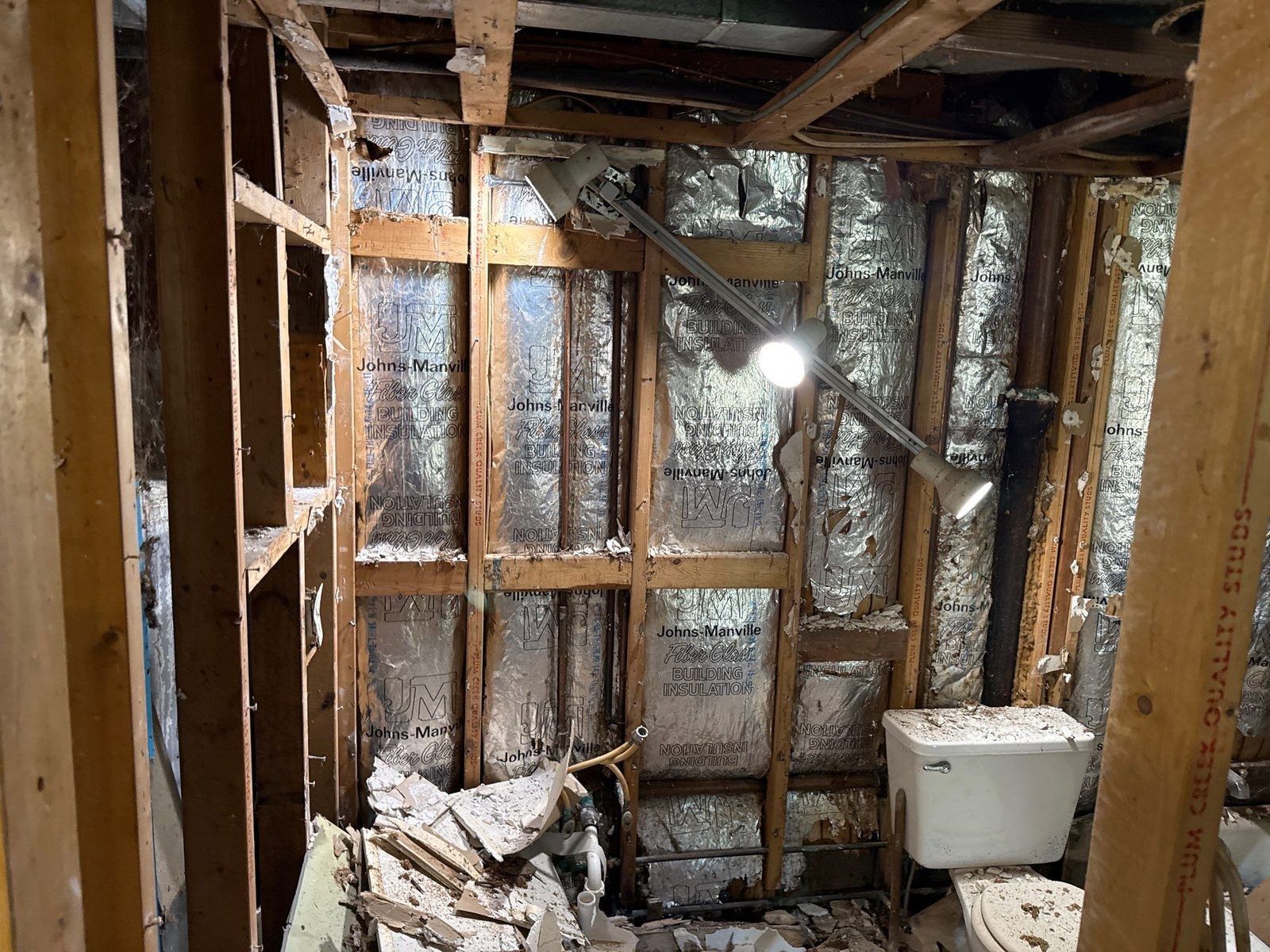
Some of the worst bathroom mold is the kind you can't see. Water gets behind tile and backer board when grout or caulk fails. A slow leak at a supply line can soak the wall cavity for months. Shower valves and drains can leak below the surface. Ceiling stains often mean water is coming from above, whether it's a leak from an upstairs bathroom or condensation on the underside of the roof.
When we suspect hidden mold, we open the area, which may include removing tile or cutting out drywall, to see what's behind it. That's the most reliable way to see how far the moisture and growth extend. If there's an active leak, our water damage restoration team handles the extraction and drying. Our water leak detection page explains how we track down hidden moisture, and ceiling water damage covers the ceiling side when the source is above.
Once the area is clean and dry, we can rebuild it, or you can use the opportunity to update the room. Our reconstruction services handle repair, and our bathroom remodeling team can take a damaged bathroom and turn it into something new.
Get Bathroom Mold Help in St. Louis, MO
If bathroom mold keeps coming back after cleaning, has reached the drywall or ceiling, or is tied to a leak, call us for an inspection. We'll find the moisture, explain what can be cleaned and what has to come out, and recommend the next step. Call (636) 812-3838 any hour. If you're dealing with mold in other parts of the house too, our mold removal page covers visible mold removal more broadly.