Water Mitigation Services in St. Louis, MO
Water mitigation is the emergency process of stopping water damage from spreading after a leak, flood, overflow, or storm-related water intrusion. In St. Louis, MO, Sansara 24/7 Restoration & Remodeling provides water mitigation services that include inspection, source-control guidance, water extraction, drying equipment setup, moisture monitoring, evaluation of affected materials, and documentation, so the property can move safely toward cleanup and restoration.
Mitigation begins before any repair does. The goal is to stabilize your property and reduce secondary damage, such as swollen drywall, warped flooring, and hidden moisture that turns into bigger problems later. We do this for houses, apartments, rental properties, and businesses. It is the first phase of water damage restoration, and it is followed by water damage cleanup and repairs.
We answer 24/7 and get a crew moving when you call (636) 812-3838.
What Is Water Mitigation?
Water mitigation means taking immediate steps to limit damage after water enters a building. Typical actions include a safety inspection, stopping the source if that can be done safely, removing water, setting drying equipment, taking out wet materials that cannot be saved, monitoring moisture, and documenting conditions.
Mitigation does not always mean the final repairs are done. Its job is to stop the damage from growing. We reduce risk, but we cannot reverse all damage instantly, and we would rather tell you that up front than promise more than water allows.
The reason mitigation matters is timing. Water keeps moving for as long as it has somewhere to go. It wicks up drywall, runs under flooring, and drops through ceilings, and each hour it has to spread adds to the amount of material that gets wet. Mitigation cuts that off, first by getting the water out and then by drying what is left so it stays put.
Water Mitigation vs. Water Restoration
The two terms describe different phases of the same job.
- Mitigation is emergency stabilization and damage control: inspection, extraction, drying setup, and monitoring.
- Cleanup removes water-damaged debris and materials, cleans and sanitizes, controls odor, and prepares the space.
- Restoration is the repair and rebuild that returns the property to its finished, pre-loss condition.
Water mitigation stops additional damage from happening. Water restoration repairs the property. For example, mitigation may include extracting water and drying wet walls, and restoration may include replacing drywall, flooring, cabinets, or finishes after the structure is dry. Our water damage cleanup handles the middle phase, and our reconstruction services handle the rebuild, so one team can carry a job from emergency to finished repair. You do not have to hand off between companies, and the moisture readings taken during mitigation are already in the file when repairs begin.
When You Need Emergency Water Mitigation
Call as soon as it is safe if you see any of these:
Standing water on floors
Wet drywall, baseboards, insulation, carpet, hardwood, cabinets, or subfloor
Ceiling leaks or sagging areas
A flooded basement
A burst pipe or a failed appliance
A sewage backup or other contaminated water
Water near outlets, switches, or the electrical panel
A musty odor after a leak
Stay out of unsafe areas, and never wade through water that touches electrical outlets or that may be contaminated. Stop the source only if you can do it safely. Our water extraction, basement flooding, burst pipe cleanup, appliance leak cleanup, and sewage cleanup work all start with mitigation.
While you wait for the crew, take photos of the water and the affected areas before anything is moved, and lift small items and furniture legs off wet floors. Move dry valuables and papers to a safe spot. Please do not start tearing out drywall or flooring yourself, since what is removed before we arrive is hard to document and can make the damage harder to trace.
Our Water Mitigation Process
Every job follows the same order, adjusted to your property and water source.
1. Emergency Call and Job Intake
When you call, we ask where the water is coming from, which rooms are affected, what type of property it is, whether water is still running, and whether anyone is in an unsafe area. We also ask whether you plan to file an insurance claim so we can document the job the right way from the start. If water is still running, we talk you through shutting it off before anything else, and we tell you what to leave alone until the crew arrives.
2. Safety Inspection and Moisture Assessment
We look for visible water, hidden moisture, contamination, and urgent hazards such as water near wiring. We use moisture meters and thermal imaging to find water behind walls and under floors and to see which materials are wet. We record readings room by room, which gives us a starting point to measure against and shows how far the water has traveled beyond what you can see.
3. Source Control and Damage Containment
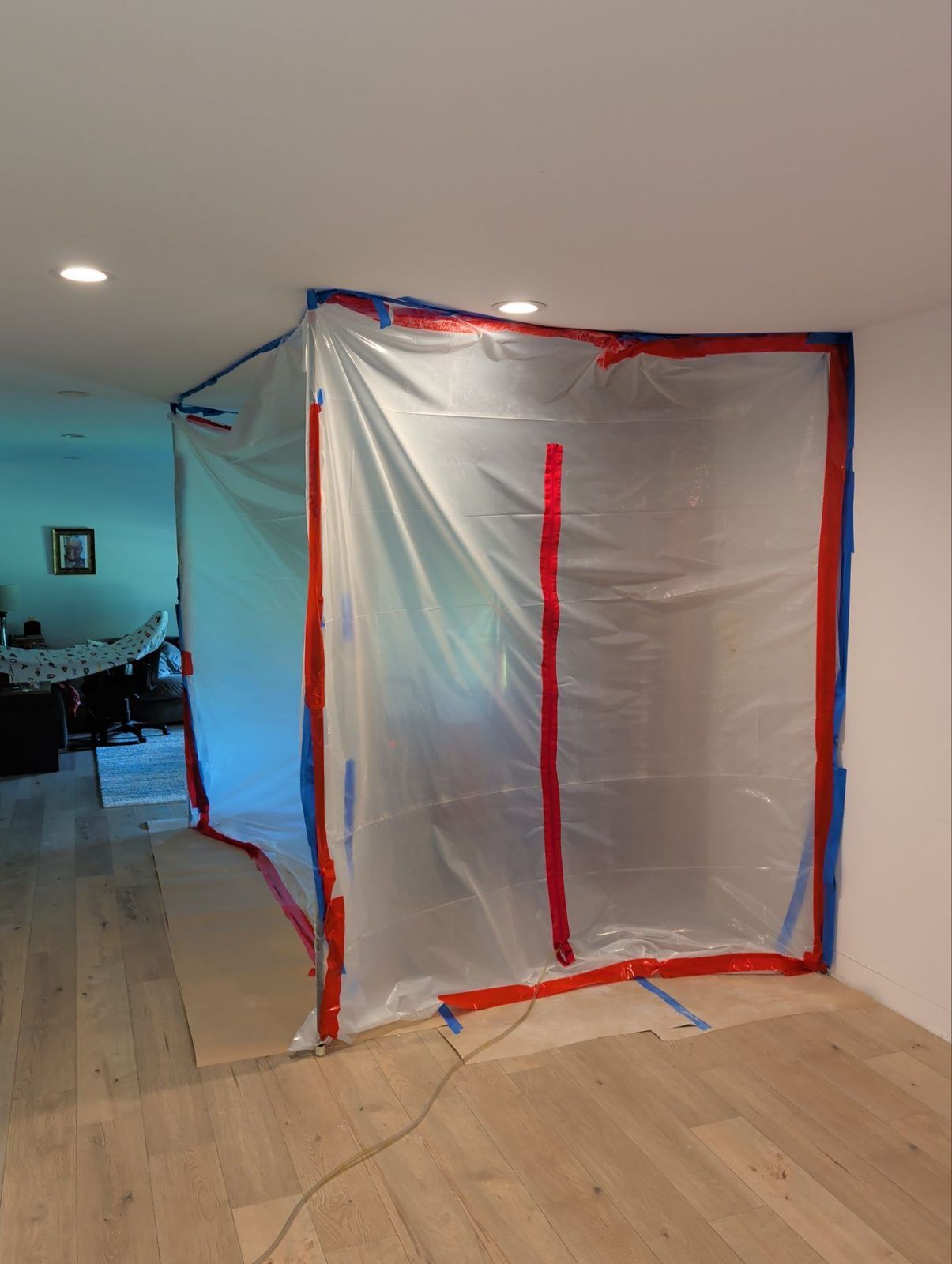
We help you stop or isolate the water when that is safe. Repairing pipes, fixtures, and roofs is not work we perform, so if the source needs repair, you will need a plumber or a roofer, and we handle the water damage. On some jobs we use containment, such as plastic barriers around the wet area, to keep moisture from moving into rooms that are still dry. Which steps a job needs depends on the source and on what we find during the inspection.
4. Water Extraction
We remove standing water from floors, carpet, and affected areas. The less water left in the building, the less there is to dry, which is why extraction comes first. Our water extraction page covers that step in more depth.
5. Drying Equipment Setup
We place air movers and dehumidifiers, use containment where it helps, and ventilate where appropriate. Air movers push dry air across wet surfaces, and dehumidifiers pull moisture out of the air so it does not settle back into the structure. We do not name a drying time before we have inspected your property, because it depends on what was wet and for how long.
6. Moisture Monitoring and Documentation
We take moisture readings at each visit, adjust equipment as materials dry, and record photos, drying logs, and scope notes. That record shows what happened and when, and it keeps the plan tied to real numbers. We come back to check the readings, move equipment where materials are drying more slowly, and remove equipment only when the numbers show the materials have dried. Drying and monitoring in detail is covered in structural drying, and a water damage inspection is where the moisture readings start.
What Happens After Water Mitigation?
Once moisture is under control, the property may need cleanup, sanitizing, odor control, material replacement, contents cleaning, or reconstruction. Some materials can dry in place, and others have to come out depending on contamination and damage. Our water damage cleanup covers debris removal and sanitizing.
If belongings have to leave the room, our pack-out services inventory, pack, move, and clean them. When it is time to repair, our reconstruction services can rebuild what was removed, or you can take the drying records to a contractor of your choice. Either way, the mitigation record stays yours, and nothing about the mitigation work locks you into anything else. All of it fits into the broader water damage restoration process.
Water Mitigation for Homes and Commercial Properties
In homes, we work in kitchens, bathrooms, laundry rooms, basements, and living spaces, and in condos, apartments, and rental properties where water in one unit reaches another. For landlords and managers, we share scope and progress so you can plan around the work.
In businesses, the concerns are downtime, the safety of people in the building, documentation, containment, and sometimes after-hours work. Tell us what needs to stay open and we plan mitigation around it where it is safe. We work across our service area in St. Louis City and County, St. Charles County, Jefferson County, Franklin County, and Monroe County, Illinois.
Insurance Documentation for Water Mitigation
Mitigation goes more smoothly when the record is clear. We document affected areas, moisture readings, photos, equipment use, and the condition of materials, and you can use that record when you talk with your insurance company. We work with your insurance company by providing it and answering questions about the work.
Coverage depends on your policy and the cause of the loss, so we cannot say what will be covered or promise a claim will be approved. Your insurance provider can answer that.
Water Mitigation and Mold Risk
Fast drying and moisture control reduce the conditions that support mold growth. Hidden moisture can stay behind walls, under floors, and inside cabinets and crawl spaces, so we do not judge a job by how dry the surface feels. We cannot guarantee mold will not develop, since delayed drying and contaminated water both raise the risk.
If you see visible mold or smell a strong musty odor, our mold remediation team can look at it separately, and a mold inspection can show what is going on before you decide what to do.
Call Sansara 24/7 Restoration & Remodeling for Water Mitigation in St. Louis, MO
If water is spreading through your property in St. Louis, MO, call Sansara 24/7 Restoration & Remodeling for water mitigation. We inspect the damage, remove standing water when needed, set drying equipment, monitor moisture, and document the job so cleanup and restoration can move forward with less uncertainty.
We are locally and family owned, based in Wildwood, and fully insured, and we answer every call at any hour. Estimates are free. Call (636) 812-3838, or use our contact form if the situation is not an emergency.