
Property Damage Reconstruction In St. Louis, MO After Water, Fire, Mold, Or Storm Damage
After water, fire, mold, storm damage, or emergency mitigation, a property often still needs drywall, insulation, flooring, trim, cabinets, paint, and coordinated repairs before it is ready to use again. Sansara 24/7 Restoration & Remodeling provides reconstruction services in St. Louis, MO for property owners and managers who need a clear path from damage assessment to rebuild. The goal is to repair the affected areas, plan the scope with you, and help return the property to a safe, working condition once the cleanup phase is done.
Reconstruction is the rebuild phase of a restoration project. It usually starts after the source of the damage has been dealt with, affected materials have been removed, and the structure has been dried, cleaned, or remediated. If your property is still taking on water, has fire or smoke damage that has not been cleaned, or has an unsafe condition, that comes first, and we can help with it by phone at any hour.
We handle rebuild work as well as mitigation, so on many jobs one team carries the project from the first call to the finished repair. That matters because the crew that dried your walls knows what came out and why. The photos, moisture readings, and drying records from that work go straight into the rebuild plan, instead of being handed off to a contractor who has to start from scratch.
You may be here because mitigation is finished and the property is still unusable. Or you may be at the start of a loss and want to know what the whole path looks like. Either way, the path is the same: stop the damage, dry and clean, confirm the structure is ready, agree on a scope, rebuild, and walk the finished work together. The sections below explain each step, and what we do and do not handle.
Ready to plan the rebuild? Request a free estimate, or call (636) 812-3838 if there is still active water, fire damage, or an unsafe condition.
When Reconstruction Is Needed After Restoration Work
Reconstruction begins when the emergency phase is over and damaged materials are gone. That can mean drywall, ceilings, flooring, trim, cabinetry, insulation, or paint that has to be replaced, or finish work that was removed during demolition. The starting point depends on what caused the damage.
After Water Damage Mitigation And Structural Drying
After a burst pipe, a flood, or an appliance leak, extraction and drying come first. Once the structure has reached normal moisture readings, wet drywall, insulation, flooring, and cabinets that could not be saved can be replaced. Our water damage restoration team handles the mitigation, and structural drying keeps the rebuild from closing walls over moisture. Rooms with water-damaged ceilings or hardwood floors often need targeted repairs, and both are common rebuild projects.
After Fire, Smoke, Or Soot Damage Cleanup
After a fire, cleanup removes burned and smoke-damaged materials and deals with soot and odor. Rebuilding replaces what was removed and refinishes the space. Our fire damage restoration team handles the fire and smoke cleanup. The rebuild follows once the property is clean and the scope is agreed.
After Mold Remediation Or Controlled Demolition
When mold is removed, or when walls, ceilings, or floors are taken out during demolition, the property has open areas that need to be closed and finished. Rebuilding starts after mold remediation is complete and the affected areas are confirmed ready. Our mold remediation team handles that part first. Storm damage follows the same pattern. After board-up, water removal, and drying, our storm damage restoration team hands the property to the rebuild.
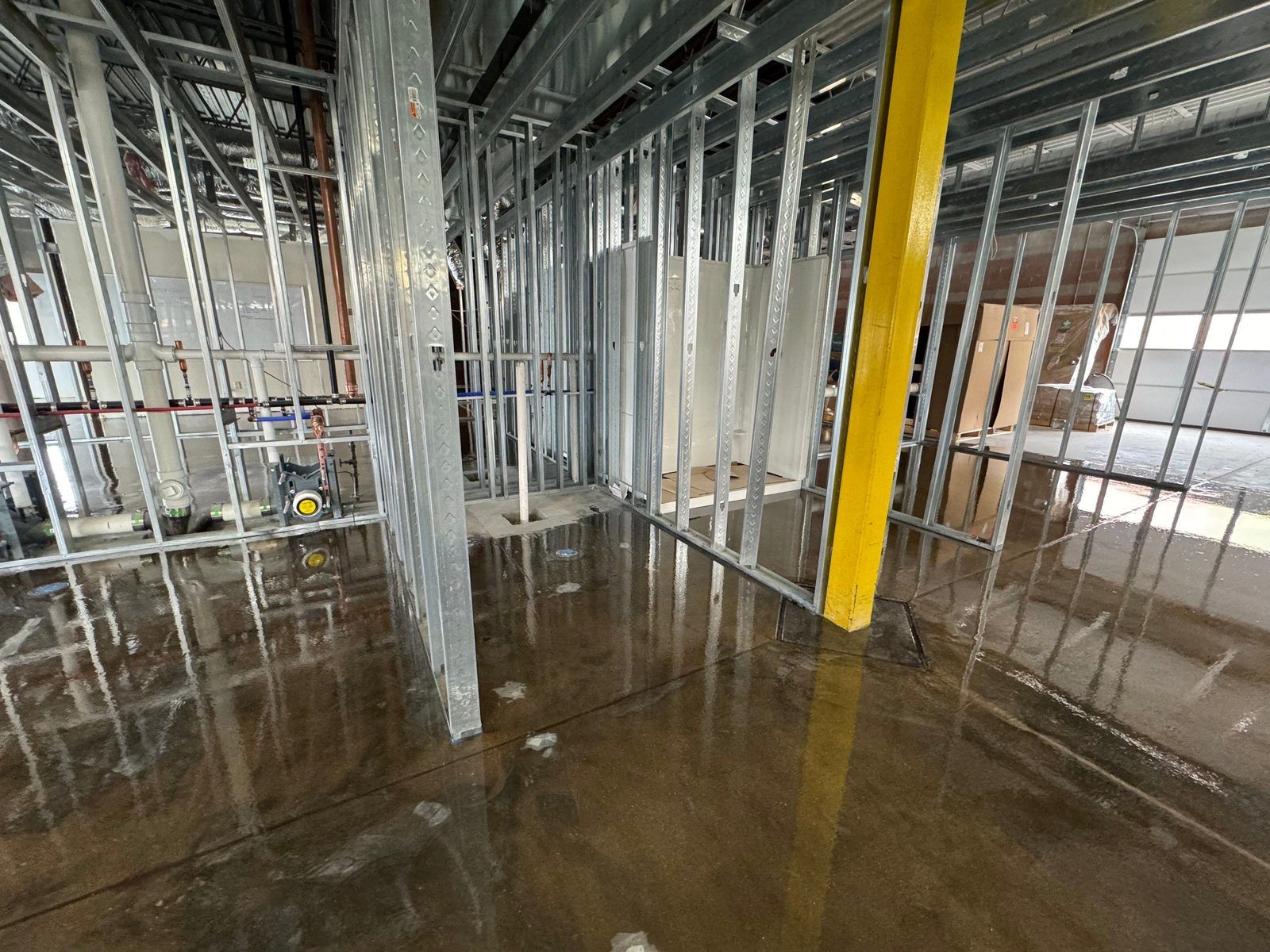
Reconstruction Services We Can Coordinate Or Provide
Reconstruction covers a range of work. Here is what we handle, and where we are direct about what belongs to another trade.
Drywall, Ceiling, And Wall Repair
After water damage, drywall and ceilings are often the first things to be replaced. We cut out damaged sections, replace insulation where needed, hang new drywall, tape and finish it, match texture, and paint. Baseboards and trim are reinstalled or replaced. Our ceiling water damage page explains what to expect when water has come through a ceiling.
Fire Damage Repair And Build-Back
After fire cleanup, we replace the materials that were removed and finish the space: drywall, insulation, flooring, trim, cabinets, and paint. Smoke-affected finishes that cannot be cleaned are replaced, and if a smoke smell lingers in a rebuilt room, our odor removal team can find the source. If fire damage extends to the structure of the building, we review it with you before the rebuild begins, and we are clear about what we do and what needs another trade.
Flooring, Trim, Cabinets, And Finish Repairs
When flooring is too damaged to save, we install new flooring after the subfloor is dry. We also replace baseboards, doors, and trim, reinstall or replace cabinets, and finish the work with paint. Our painting team handles interior painting, and the details matter: matching color, texture, and trim so the repair does not stand out.
Structural And Exterior Repairs
Some damage reaches beyond finishes. We replace windows and doors, and we repair and paint exterior wood that has been damaged by water. Roofing is not something we do, and neither are gutters, solar, or skylights, so a roof that needs repair goes to a roofing contractor. If damage reaches framing or other structural parts of a building, we look at it with you, bring in the right people to evaluate and repair it, and tell you plainly which parts of the project are ours.
Packout, Contents Protection, And Move-Back
Belongings often have to leave a room while repairs are done. Our pack-out service inventories, packs, moves, and cleans your contents so they are protected while crews work and can be returned when the repairs are finished. If you need storage for your belongings, ask us about storage options for your project.
From Mitigation Scope To Rebuild Plan
A good rebuild starts with the records from the mitigation phase. This is how we move from one to the other.
Review Damage Documentation And Affected Materials
We review the photos, moisture readings, drying records, and demolition notes from the mitigation work, along with the list of materials that were removed. If we did the mitigation, we already have those records. If another company did, we ask to see theirs. That review tells us what the rebuild has to replace.
Confirm The Property Is Ready For Build-Back
We do not close walls or replace finishes until moisture readings show the structure is dry, and any mold or contamination has been dealt with. Rebuilding over a wet or unresolved area only leads to repeat damage. We confirm readiness before repair work starts.
Create A Practical Repair Scope
We put together a written scope of the repairs based on the affected areas, the materials, your priorities, and what a permit or another trade may require. The scope lists what is included and what is not, and we talk through timing: what has to happen first, how long materials may take to arrive, and which rooms can stay in use while work continues. If you have an insurance claim, we work with your insurance company by providing our photos, records, and itemized scope. We cannot promise that a claim will be approved or that a scope will be accepted as written. Those decisions belong to your insurance company.
Build-Back Support For Homes And Businesses
The rebuild process is similar whether the property is a home or a business, but the priorities are not.
Home Reconstruction After Property Damage
In a home, reconstruction often means kitchens, bathrooms, bedrooms, basements, living areas, and garages. When damage hits a kitchen, bathroom, or basement, some owners take the chance to update the space. Our kitchen remodeling, bathroom remodeling, and basement remodeling teams can plan that with the repair, so the rebuild and the upgrade happen together instead of twice.
Rebuilding After Damage At A Business
For business owners and property managers, the rebuild has to work around customers, tenants, and staff. We talk through access, which areas need to be closed off, and how the work will be phased, and you get the documentation you need for your own records and your insurance company. Where the layout allows, we work in sections so parts of the building can stay in use while other parts are rebuilt.
The rebuild is the final stage of our commercial restoration services.
What Reconstruction Does Not Replace
Reconstruction is one phase of recovery. It does not replace the phases that come before it, and it is different from a planned remodel.
Emergency Mitigation Comes First When Damage Is Active
If there is standing water, active leaks, fire damage that has not been cleaned, mold growth, or an unsafe condition, those need attention before any repair. Call (636) 812-3838 and we will get a crew moving on the emergency first. Rebuilding on top of an unresolved problem costs more in the end.
Regulated Materials May Require Specialists
Some older buildings contain asbestos or lead paint, and some losses involve contamination. Asbestos and lead abatement are specialist work that we do not do, and if they are found, a qualified specialist has to handle them before repairs continue. If contamination such as sewage is involved, our biohazard cleanup work comes first, and the rebuild follows.
Reconstruction after damage is also different from a planned upgrade. If you want to remodel rather than repair, our full-service repairs and remodeling team handles that as well.
Our Reconstruction Process
Reconstruction moves in five steps, and you know where the project stands at each one.
1. Damage Review And Reconstruction Assessment
We look at the damage, the affected rooms, the mitigation records, and the moisture status, and we talk with you about what you want the space to be when we are done.
2. Scope, Estimate, And Material Planning
We prepare a written repair scope, identify the materials, confirm your selections, and spell out what is included and what is not. Estimates are free.
3. Permits, Trades, And Scheduling
Some repairs need a permit or a specialist trade such as a plumber or an electrician. When your scope calls for either, we tell you up front and plan the schedule around it so the work happens in the right order.
4. Build-Back And Quality Checks
We complete the agreed repairs and check the finished work as it goes: drywall, flooring, trim, paint, and any other items in the scope. Where an inspection is required, we schedule the work around it.
5. Contents Move-Back And Final Walkthrough
If your belongings were packed out, we coordinate their return when the rooms are ready. Then we walk the finished work with you, answer your questions, and confirm nothing on the list has been missed.
Why Choose Sansara 24/7 Restoration & Remodeling For Reconstruction Services In St. Louis
Rebuilding after damage is a big decision, and it helps to work with a team that knows the job from the start. Sansara is locally and family owned and based in Wildwood, and we serve homes and businesses across the St. Louis area.
Handoffs are where rebuilds tend to go wrong. One company dries, another demolishes, a third rebuilds, and nobody owns the gaps between them. When a project starts with us, the same company is accountable from the first call to the final walkthrough.
What you can count on:
One team that can carry a project from emergency cleanup through the rebuild
Written documentation of the damage, the mitigation, and the repairs
A fully insured company
A BBB Accredited business with an A+ rating
Free estimates
Someone answering the phone 24/7 at (636) 812-3838
We serve St. Louis City and St. Louis County, including Chesterfield, Town & Country, Wildwood, Ladue, Ellisville, Ballwin, Clayton, and Clarkson Valley, as well as St. Charles and O'Fallon in St. Charles County, Jefferson County, Franklin County, and Monroe County in Illinois.
Request Reconstruction Services in St. Louis, MO
If your property has been through water mitigation, fire cleanup, mold remediation, storm stabilization, or demolition, Sansara 24/7 Restoration & Remodeling can help you plan the next step. Contact us for reconstruction services in St. Louis, MO and get a clearer scope for repairing the affected areas and moving the property closer to normal use.
Request a free estimate online. For active leaks, standing water, fire damage, or unsafe conditions, call (636) 812-3838 for emergency help first.