
Professional Mold Inspection for Homes and Businesses in St. Louis
A mold inspection answers the questions that come before any cleanup: is there mold, where is it, what is it growing on, and where is the moisture coming from? Our mold inspection team in St. Louis, MO looks at visible growth, checks the moisture in the surrounding materials, and finds the likely source, so the next step is based on what's actually in your property and not on a guess. Sansara 24/7 Restoration & Remodeling is locally and family owned and based in Wildwood.
People call us for an inspection when they see spotting on a wall or ceiling, smell a musty odor they can't trace, or have had a recent leak and want to know whether anything is growing behind the surface. Some call because a home inspection raised a moisture concern. Others already know there is mold and want its extent defined before anyone starts cutting into walls.
You come away with a clear picture of what we found, photos and moisture readings that back it up, and a plain recommendation for what should happen next. That might be removal, a full remediation plan, testing, a water damage repair, or nothing beyond fixing a source of humidity.
When You Should Schedule a Mold Inspection
Schedule an inspection when any of these sound familiar:
A musty odor that stays even after you clean or air out the room
Visible spotting or staining on walls, ceilings, trim, or in corners
Condensation on windows or walls that keeps returning
Recent water damage from a leak, an appliance failure, a flood, or storm damage
A damp or humid basement or crawl space
An attic that shows roof leak staining or damp insulation
A musty smell when the heating or cooling comes on
A home purchase, sale, or lease where moisture or mold has come up
If anyone in the property is bothered by the air indoors, talk with your doctor about that. We can't diagnose health issues, but we can tell you whether the property has a moisture or mold problem that should be dealt with.
While you wait for the inspection, a few small steps help. Don't scrub, sand, or scrape the mold, since that can spread it. Shut off any active water if you can do that safely, keep the area ventilated, and run a dehumidifier if you have one. Take photos, and jot down when you first noticed the problem and any leaks or floods you remember. That history helps us find the source faster.
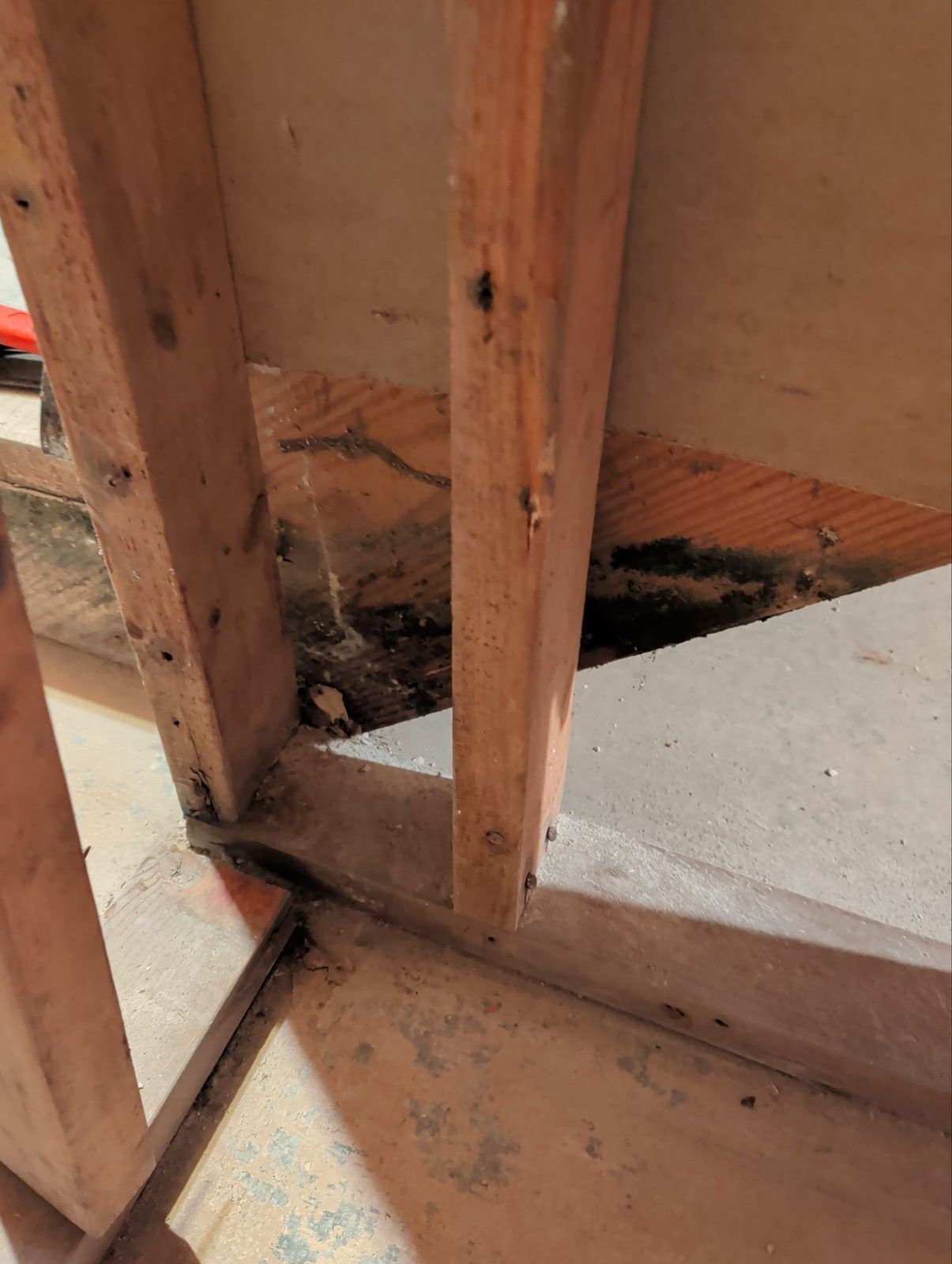
What a Mold Inspection Includes
Every inspection is built around the same idea: mold follows moisture, so we look at both. We walk the areas of concern, and the areas around them, and document what we find.
Visual Inspection
We start with what can be seen: visible growth, staining, peeling paint, warped or swollen material, and signs of past water. We look at ceilings, wall bases, window sills, cabinets under sinks, exhaust fans, and any access to attics, basements, and crawl spaces. Mold often sits on the back side of things, so we check behind and above the spot that first caught your attention.
Moisture and Humidity Checks
We use moisture meters to read the moisture level in drywall, wood, subfloor, and other materials, and we compare wet areas to dry ones. We also use thermal imaging, which shows temperature differences that can point to damp areas behind surfaces. Thermal imaging doesn't find mold itself, but it can show us where to take moisture readings and where to look closer. We also note how humid the space feels and whether ventilation is doing its job.
Affected Material Review
What the mold is on changes the plan. Growth on tile, metal, or sealed wood is handled differently than growth on drywall, insulation, carpet, or ceiling tile, where it can grow into the material. We identify which materials are involved and which look salvageable, so you know early whether the likely answer is cleaning, removal, or both.
Source Identification
Finding the water matters as much as finding the mold. We look for leaking pipes and fixtures, roof or window leaks, appliance failures, foundation seepage, condensation, and poor ventilation. If the source is a leaking pipe or fixture, a plumber will need to repair it, and we handle the water damage and mold that came with it. If a leak is hard to locate, our water leak detection page explains how we track down hidden moisture.
Recommendations and Documentation
Before we leave, we tell you what we found and what we recommend. We photograph the affected areas, record the moisture readings, and describe the scope of the problem, so you have something concrete to plan around and to share with your insurance company, landlord, or property manager if you need to. If we recommend work, we explain what it would involve: which materials are likely to be cleaned, which would be replaced, and what the drying and rebuilding steps would look like. Then you decide on your own timeline.
Mold Inspection vs. Mold Testing
An inspection and a test are not the same thing. An inspection looks for visible growth, moisture, and the conditions that let mold grow, and it results in a plan. Testing collects samples, such as an air sample or a surface sample, and sends them for analysis, which adds information about what may be present. Testing can be useful in some situations, but it isn't always needed. If mold is visible and there's a moisture problem behind it, the property needs source control and cleanup whatever a sample would show. Our mold testing page explains when sampling helps and what results can and can't tell you, and we'll tell you honestly whether it's worth adding for your situation.
What Happens After Mold Is Found
The findings decide the next step, and we explain the options plainly.
- Visible growth on a wall, ceiling, or piece of wood usually points to mold removal.
- Mold across a larger area, behind finished surfaces, or tied to water damage usually points to full mold remediation, with containment and drying.
- Dark growth that worries you is covered in our black mold removal page, including what to do until it's been assessed.
- Mold in the attic, often tied to roof leaks or ventilation, is covered by attic mold removal.
- Mold under the house, tied to ground moisture and humidity, is covered by crawl space mold removal.
- Mold in a basement or bathroom, where seepage, leaks, and humidity are the usual causes, is covered by our basement mold removal and bathroom mold removal pages.
- If active water damage is the real problem, our water damage restoration team extracts and dries the property so the mold isn't fed by the source.
In some cases the inspection finds only a humidity problem, a leak that needs a plumber, or a spot small enough to clean yourself. When that's the answer, we'll say so.
Schedule a Mold Inspection in St. Louis, MO
If you see mold, smell musty odors, or recently had water damage, call us or request an assessment. We'll come look at the affected areas, explain what we find, and recommend the next step for your home or business. Call (636) 812-3838 any hour, or use our contact page to send us the details and a few photos.