
Fast Bathtub Overflow Cleanup In St. Louis, MO
Most bathtub overflows are clean-water events: a faucet left running, a stuck stopper, or an overflow drain that can't keep up. The water floods the bathroom floor, but the real damage is often out of sight. It runs under the tub, into the wall cavities, through the subfloor, and, in a second-floor bathroom, through the ceiling of the room below. Sansara 24/7 Restoration & Remodeling handles bathtub overflow cleanup in St. Louis, MO. We answer 24/7, and our team removes the water, dries the bathroom, the walls, and the ceiling below, and documents the damage.
A full tub holds a lot of water, and once it goes over the edge, it behaves like a slow flood. Because the water is usually clean water from the supply, more materials can often be dried in place, as long as drying starts before the water has sat too long. We check how far it went, and we tell you honestly what can stay and what can't.
We fix the water damage. We don't repair tubs, drains, or faucets, and a plumber does that work. If water is coming back up through the tub drain instead of overflowing from the faucet side, that is a drain backup, and it may be contaminated. Call a plumber and call us, and our sewage cleanup team can take it from there. Bathtub overflows sit inside our water damage restoration work, and when water is standing, water extraction always comes first.
What to Do Right Away
Start with the source, then check below.
Shut off the faucet. If it won't stop, close the shutoff valves under or near the tub, or the main water shutoff for the house.
Pull the stopper so the tub drains. If it won't drain, or water is coming back up, stop using water in the house and call a plumber.
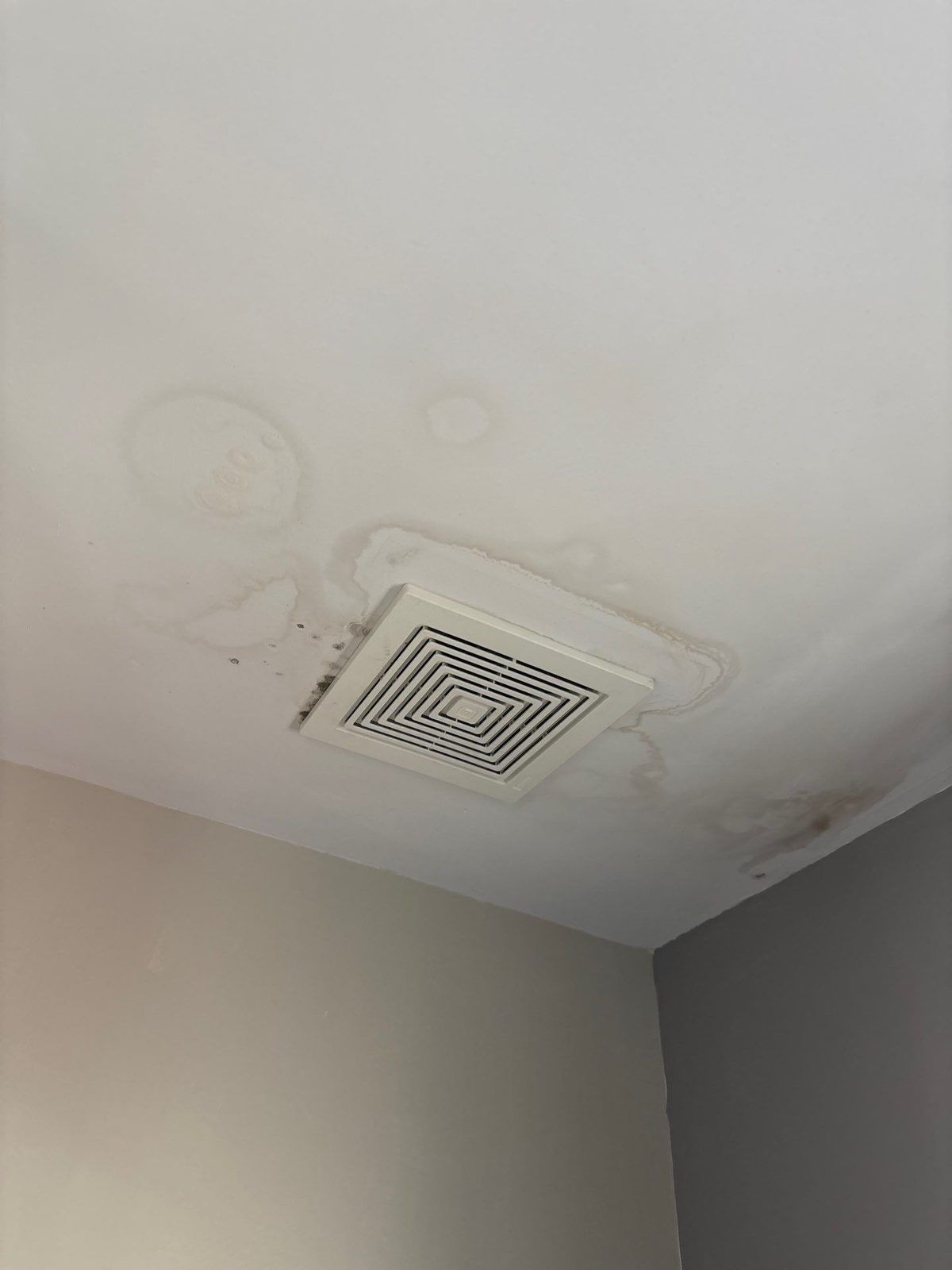
Go check the room below. Look at the ceiling, the walls, and any light fixture under the bathroom. Stay out from under a bulging or sagging ceiling, keep others away from it, and call us so the trapped water can be dealt with safely.
Watch the electrical hazards. If water has reached bathroom outlets or fans, or a ceiling light below is wet or dripping, turn off that circuit at the breaker panel and stay out of the standing water.
Blot up standing water with towels. Move rugs, hampers, and cabinet contents out of the wet area. A household vacuum is not made for standing water.
Take photos of the tub, the floor, the walls, and the ceiling below.
Leave flooring and tile in place. Pulling it up before it is documented makes the damage harder to show.
If water is still running, spreading to other rooms, or coming through a ceiling, call (636) 812-3838 now, at any hour.
How Our Bathtub Overflow Cleanup Process Works
A bathtub overflow can involve two floors, so our process is built to follow the water wherever it went.
Inspection and moisture mapping. We take moisture readings across the bathroom floor, at the base of the tub and vanity, in the walls, at the door threshold, in the hallway, and in the ceiling and walls of the room below. Thermal imaging shows moisture we can't see inside walls and ceilings.
Water extraction. We remove standing water from tile, vinyl, and any carpet in the bathroom and the rooms beside it, so less of it soaks into the subfloor.
Removal decisions. Clean water gives materials a better chance, but soaked insulation, saturated ceiling drywall, and carpet pad in the hallway often can't be dried in place. We open small sections to see inside cavities, and we explain what has to come out and why before it does.
Structural drying and dehumidification. Bathrooms dry slowly, with tile, a tub surround, and a closed door, so we set air movers and dehumidifiers, dry the cavities under the tub and behind the walls, and dry the ceiling below through small openings when we can. We check readings on each visit, and our structural drying work continues until the materials read dry.
Cleaning, deodorizing, and documentation. We clean the affected areas, treat musty odors, and record photos, readings, and drying records for your estimate, your insurance company, and your repair plan.
Common Damage Areas and Warning Signs
Water from a bathtub follows the drain lines, the wall cavities, and the floor framing, so the damage often shows up in a different room than the overflow.
Warning signs to look for:
Water stains, bubbling paint, or sagging on the ceiling below the bathroom, or drips from a ceiling light
Tile that feels loose, grout that stays dark, or a floor that feels spongy near the tub
Vinyl that curls or bubbles at the seams, or hardwood or laminate that lifts in the hallway
Baseboards that swell or peel, or paint that bubbles on the wall beside the tub
A musty smell in the bathroom or the room below that doesn't fade
Wet spots under the tub or on the ceiling below with no obvious overflow, which can point to a leaking drain or overflow gasket, and that is a plumber's job
A bathtub overflow becomes a larger water damage job when the water has reached the ceiling below, run into wall cavities, or sat for hours, especially from a second-floor bathroom. At that point, drying has to reach the framing and insulation, and some drywall usually needs to be opened or replaced. Our ceiling water damage work covers the room below.
Wet cavities and subfloors can support mold. We dry to reduce that risk, but we can't promise mold won't appear. If you already see growth, or a musty smell lingers as things dry, our mold remediation team can look at it separately.
Cleanup, Drying, and Repair Coordination
Drying only holds once the leak has stopped, so the order of the work matters.
Tub, drain, overflow gasket, faucet, and valve repair or replacement: a plumber
Extraction, drying, cleaning, odor control, and documentation: our team
Rebuilding ceilings, drywall, flooring, and baseboards that had to come out: our team, through our reconstruction services
We work around your plumber's schedule. If a plumber finds a leaking drain or overflow gasket, that repair should happen before drying is finished, or the water may come back.
If the water reached the room below, furniture and belongings there may need to be moved before we open the ceiling. Our pack-out services inventory, pack, move, and clean contents while the work happens. Ask us about storage options for your project.
We document the loss with photos, moisture readings, drying records, and an itemized scope, and we work with your insurance company. Whether your policy covers a bathtub overflow is between you and them.
Related Water Damage Services
Other pages that may fit your situation:
Ceiling water damage: drying and repairing the ceiling and walls in the room below the bathroom.
Toilet overflow cleanup: the same bathroom, but with water that may be contaminated.
Water extraction: how we remove standing water and why it comes first.
Structural drying: how we dry floors, walls, and cavities and confirm they are dry.
Water damage cleanup: cleanup and drying after water damage from any source.
Water damage restoration: everything we do for water damage, from the first call to the rebuild.
Water mitigation: how we stop the damage from spreading in the first hours.
Get Bathtub Overflow Cleanup Help in St. Louis, MO
If a bathtub has overflowed, or you've noticed a stain on a ceiling under a bathroom, call before the water has more time to soak into the floor and walls. A look with moisture readings tells you whether it is a wipe-up job or a drying job.
We are locally and family owned, based in Wildwood, and fully insured. We serve homes and businesses across St. Louis, St. Louis County, St. Charles County, Jefferson County, Franklin County, and Monroe County, Illinois, including Chesterfield, Clayton, Town & Country, and O'Fallon. Call (636) 812-3838 any hour. Estimates are free.