Water Damage Cleanup Services in St. Louis, MO
When water damages a home or business in St. Louis, MO, cleanup has to start quickly and follow a clear process. Sansara 24/7 Restoration & Remodeling provides water damage cleanup services for leaks, floods, plumbing overflows, appliance failures, storm water, and other water emergencies. Our team inspects the affected areas, removes standing water when needed, cleans and sanitizes damaged spaces, dries wet materials, documents the loss, and helps you move toward repair.
Cleanup is broader than mopping up the water you can see. It includes taking out materials that cannot be saved, cleaning what can be saved, controlling odors, and making sure the space is dry enough to rebuild. It is one phase of the larger water damage restoration process, and it works alongside water mitigation and water extraction rather than replacing them.
We answer 24/7, so a wet floor at midnight gets the same attention as a wet floor at noon. Call (636) 812-3838 to talk with our team.
Emergency Cleanup After Leaks, Floods, and Overflows
Some signs mean you need professional help right away, not a mop and a fan:
Standing water or soaked carpet
Drywall that is soft, stained, or bulging
Flooring that is cupping, lifting, or wet underneath
Swollen cabinets or baseboards
Ceiling stains, sagging, or drips
A musty odor that showed up after a leak
Water near outlets, switches, or the electrical panel
Water gets into a property from a burst pipe, a leaking appliance, a roof leak, a flooded basement, a toilet overflow, a sewer backup, sprinkler discharge, or storm water. The source matters because it changes how we clean. After a burst pipe cleanup, the first question is how far the water traveled and what it soaked. With basement flooding, it is how deep the water got and how long it sat. An appliance leak cleanup often means water hidden behind cabinets and under flooring. Sewage cleanup and flood damage restoration involve contaminated water and different safety steps.
If it is safe to do so, stop the water at its source, usually a shutoff valve at the fixture or the main. Do not walk through standing water if outlets, cords, or appliances are involved. Repairing the pipe, appliance, or roof is work for a plumber or a roofer, and we do not perform those trades. We handle the water damage and the cleanup that follows.
While you wait for the crew, take photos of the water and the damage before anything is moved, lift furniture legs and small items off wet carpet, and set aside valuables and papers that are still dry. Skip the household fans and space heaters if you are not sure the wiring is safe, and do not start tearing out drywall or flooring on your own. What you remove before we arrive is hard to document, and it can make the damage harder to trace.
What Water Damage Cleanup Includes
The scope of a cleanup depends on the water source, the contamination level, the materials involved, and how long the water has been there. Here is what the work looks like from the first visit to the point where drying takes over.
Inspection and Safety Check
We start by walking the property to identify affected rooms and materials, the likely water source, and anything unsafe, such as water near electrical systems, a ceiling holding water, or contaminated water. We use moisture meters and thermal imaging to check for moisture that is not visible, and we record what we find room by room. Our water damage inspection sets the scope for everything that follows, so the plan is based on readings rather than guesses.
Standing Water Removal and Wet Material Handling
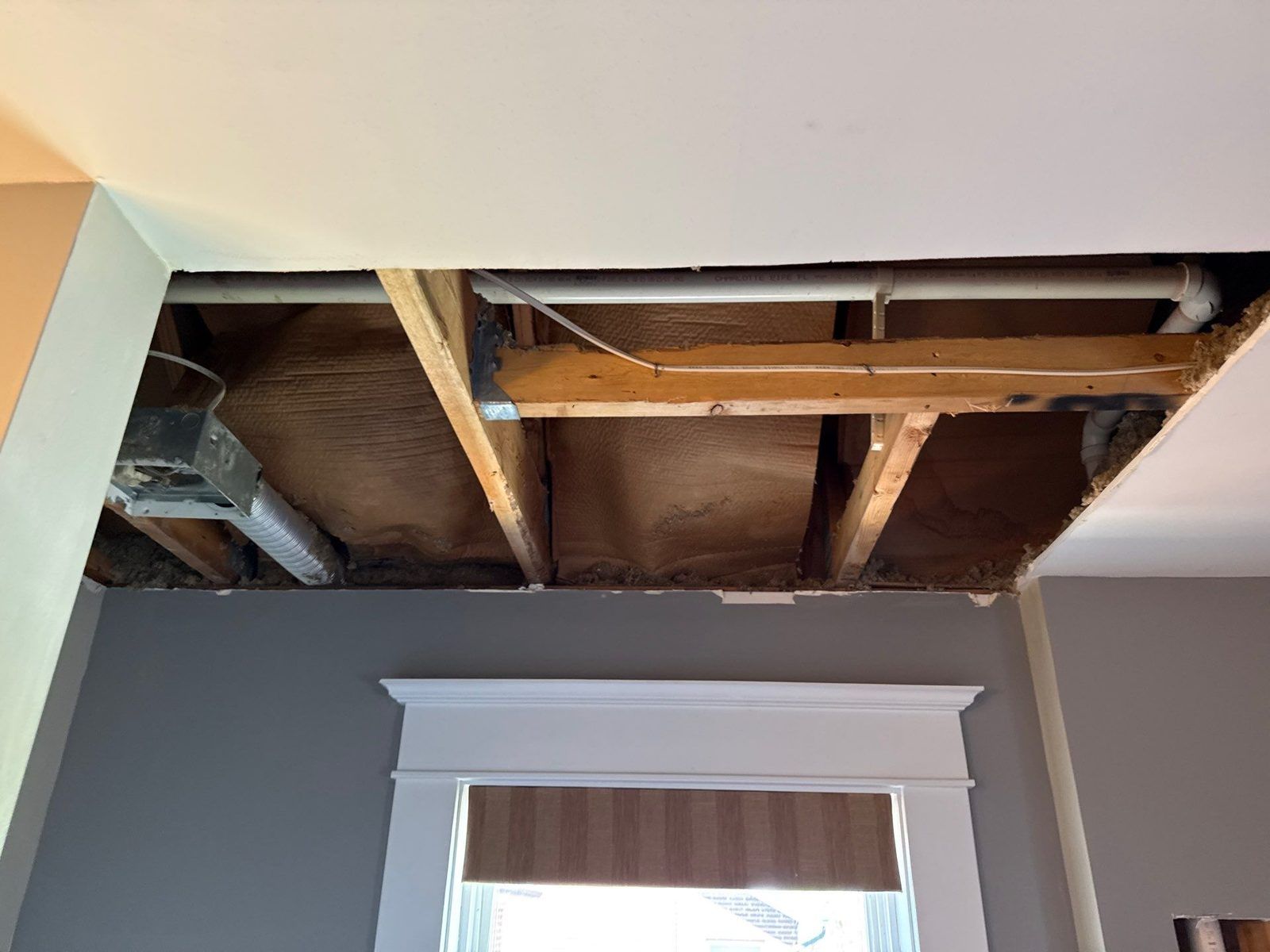
If there is standing water, we remove it first through water extraction, because every gallon we pull out is moisture that does not have to be dried later. Then we sort the wet materials. Carpet pad, wet insulation, and saturated drywall often cannot be dried safely in place, especially after contaminated water, so we remove them, bag the debris, and take it out of the property. We cut drywall back to a clean line above the wet area so the wall cavity can dry, and we leave the rest in place where readings allow. Materials that can be dried stay. We also move belongings out of the wet area when it is safe, and when a whole room needs to be emptied, our pack-out services inventory, pack, move, and clean the contents.
Cleaning, Sanitizing, and Odor Control
Once the wet debris is out, we clean the hard surfaces that remain, including floors, subfloors, framing, and cabinet interiors, and we sanitize where the water category calls for it. Odors usually come from wet materials, contaminated water, or moisture trapped in a cavity, so removing the source and drying the space does most of the work. If a smell lingers after cleanup, we can address it through odor removal, but we do not promise that every odor will be gone.
Drying Support and Moisture Monitoring
We set up air movers and dehumidifiers, add containment when needed to keep the affected area separate, and take moisture readings at each visit. Those readings go into a drying log so you can see the materials getting drier, and we do not pull equipment until the numbers show the job is done. The technical side of that work, including how we place equipment and decide when a material is dry, is part of our structural drying.
Cleanup for Different Types of Water Damage
Not all water is the same, and cleanup changes with what the water carried in. Restoration professionals sort water into three categories, and we plan cleanup around them.
Clean Water Leaks
Broken supply lines, faucet and appliance lines, and water heater leaks release clean water. It is the least hazardous category, but it is still urgent. Clean water soaks into drywall, subfloors, and cabinets quickly, and if it sits, it picks up dirt and can become a more serious problem.
Gray Water and Appliance Overflows
Dishwashers, washing machines, and some toilet overflows that do not involve sewage release gray water, which carries some contamination. Cleanup takes more care: more thorough cleaning and sanitizing, and closer decisions about carpet, pad, and other porous materials that soaked it up.
Sewage, Floodwater, and Category 3 Water
Sewage, floodwater, and other heavily contaminated water is Category 3. It calls for protective equipment, removal of porous materials that cannot be cleaned safely, and careful sanitizing. That is a job for a crew with the right gear, not a homeowner with a wet vac. Our sewage cleanup and flood damage restoration work covers those losses in detail.
Water Damage Cleanup vs. Water Mitigation vs. Restoration
People use these terms interchangeably, but they describe different parts of the same job. Cleanup removes water-damaged debris and materials, cleans and sanitizes the affected areas, controls odor, and prepares the space for drying and repair. Water mitigation is the emergency work that stops damage from spreading: fast response, extraction, drying setup, containment, and monitoring. Restoration is the full process of returning the property to a safe, usable condition, including repairs and rebuild where needed.
On most jobs these overlap, and the same crew often does all three in sequence. What matters to you is knowing which phase you are in, and we tell you.
Mold Risk After Water Damage Cleanup
Moisture trapped behind walls, under floors, in cabinets, and inside insulation can lead to mold, which is why cleanup includes moisture checks and drying support and not just removing what you can see. Proper cleanup and drying reduce that risk, but no company can promise mold will never develop. It depends on how long materials were wet and what they are made of.
If you see visible mold or smell a strong musty odor after a water loss, that needs a closer look. Our mold remediation team handles it as a separate scope, and a mold inspection can tell you what is going on before you decide what to do.
Insurance Documentation for Water Damage Cleanup
Many customers need records for their insurance company. During cleanup we document the affected areas with photos, moisture readings, notes on the scope of work, the damaged materials removed, and drying logs when equipment is used. That record is yours to share with your adjuster, and we work with your insurance company by answering questions about what we found and did.
We cannot tell you whether your policy covers the loss or guarantee that a claim will be approved. That is between you and your insurer. What we can do is make sure the documentation is complete.
Call Sansara 24/7 Restoration & Remodeling for Water Damage Cleanup in St. Louis, MO
If water has damaged your home, rental property, or business in St. Louis, MO, call Sansara 24/7 Restoration & Remodeling for water damage cleanup. We inspect the affected areas, remove water-damaged materials when needed, clean and sanitize the space, set up drying support, and document the cleanup so you can move toward repair with a clearer plan.
We are locally and family owned, based in Wildwood, and fully insured, and we answer every call at any hour. When cleanup and drying are finished, we can talk through repairs or rebuild with you, since reconstruction is something we handle as well. Estimates are free. Call (636) 812-3838 now, or send us a message through our contact form if the situation is not an emergency.