
Professional Mold Removal for Visible Mold Problems in St. Louis
If you can see mold on walls, ceilings, floors, trim, wood, drywall, or other building materials, it should be handled before it spreads or returns. Our mold removal team in St. Louis, MO helps identify the affected area, removes visible mold from surfaces that can be saved, takes out materials that can't be cleaned, and ties the cleanup to the moisture problem that caused it. Sansara 24/7 Restoration & Remodeling is locally and family owned, based in Wildwood, and we answer the phone any hour.
Most people find mold one of two ways. They see it: dark spots in the corner of a ceiling, fuzzy growth on the back wall of a closet, staining along basement trim. Or they smell it first and start looking. Either way, the questions are the same. How far does it go, what is it growing on, and why is it there? A quick wipe takes away what you can see and leaves the cause in place, which is why so much mold reappears within weeks of being cleaned.
When you call, we'll ask where the mold is, what it's growing on, and whether there has been a leak, a flood, or storm damage. Then we come look, take moisture readings, and explain what can be cleaned and what has to come out before any work starts.
What Our Mold Removal Service Covers
Our mold removal service covers visible mold on hard, semi-porous, and porous materials. That includes:
Cleaning salvageable surfaces when cleaning is reliable
Removing contaminated drywall, insulation, carpet, ceiling tile, and other porous materials when it isn't
HEPA vacuuming and detail cleaning of the affected area
Moisture checks, and recommendations to keep the mold from coming back
The method follows the material, not a fixed script. What works on a tile wall doesn't work on drywall, and what works on solid framing doesn't work on wet carpet pad.
Mold Cleanup for Walls, Ceilings, and Trim
Mold on walls and ceilings usually starts with moisture: a leak, condensation, high humidity, or water damage that was never fully dried. Ceiling mold is often a sign that the water is coming from above, so we look at the space above the stain as well as the stain itself. Painted trim and other solid surfaces can often be cleaned in place. Soft, swollen, or stained-through material is another matter, and it is usually cut out and replaced so that mold isn't just painted over.
Mold Removal From Wood and Framing
Wood can often be saved. Depending on how deep the growth goes, framing and other wood may be cleaned, HEPA vacuumed, dried, and treated, and some surface work may be needed to remove staining and growth from the grain. Wood that is soft, crumbly, or sagging is a different problem than surface mold. We'll tell you what we see, and if framing looks compromised we'll recommend having it evaluated by someone qualified to assess structure before you rely on it.
Mold on Drywall, Carpet, and Porous Materials
Porous materials are the hard case. Mold grows into the paper face of drywall, the backing of carpet, carpet pad, insulation, and ceiling tile, where surface cleaning can't reach it. When these materials are moldy, they usually need to be removed and replaced. We cut out affected material beyond the visible edge, bag it to limit the spread, and clean what's left. Once the area is dry, our reconstruction services can rebuild what was removed.
DIY Mold Removal vs. Professional Mold Removal
Some mold cleanup is reasonable to do yourself. A small spot on a hard, non-porous surface, like tile, glass, metal, or a sealed countertop, can be cleaned by a homeowner who wears gloves, eye protection, and a mask rated for fine particles, and who keeps the area ventilated.
Other situations are better left alone until someone has looked at them:
- Large areas of growth
- Mold that keeps returning after cleaning
- Mold after flooding, a sewage backup, or other contaminated water
- Mold inside a wall, ceiling, or floor cavity
- Mold near your heating and cooling system
- Mold in a home where someone has asthma, allergies, a chronic lung condition, or a weakened immune system
Don't mix cleaning chemicals. Bleach combined with ammonia or other cleaners can create dangerous fumes. And if mold keeps coming back after you've cleaned it, the moisture source hasn't been solved. That, more than the cleaner you use, is the problem to chase.
Mold Removal vs. Mold Remediation
The two terms overlap, and it helps to know the difference. Mold removal focuses on visible mold and the materials that are contaminated. Mold remediation is the broader process that adds containment, source control, drying, and documentation around that removal work. Many real projects need both: the visible mold comes out, and the conditions that grew it get corrected. If yours involves water damage, hidden growth, or a large area, our mold remediation page walks through the full process we follow.
When to Call a Mold Removal Company
Call for help instead of cleaning it yourself when:
The mold covers more than a small, isolated area
Growth comes back after cleaning
The mold followed a roof leak, plumbing leak, appliance failure, basement seepage, crawl space moisture, or storm water
The mold is on drywall, carpet, insulation, or other porous materials
There is a musty odor and you can't find the source
Anyone in the property has asthma, allergies, chronic lung disease, or a weakened immune system
You don't need to be sure it's serious before you call. We'll help you sort out whether it's a cleaning job, a removal job, or something that needs a closer look first.
How Professional Mold Removal Works
Here is what a typical removal project looks like from the first visit to the last cleanup.
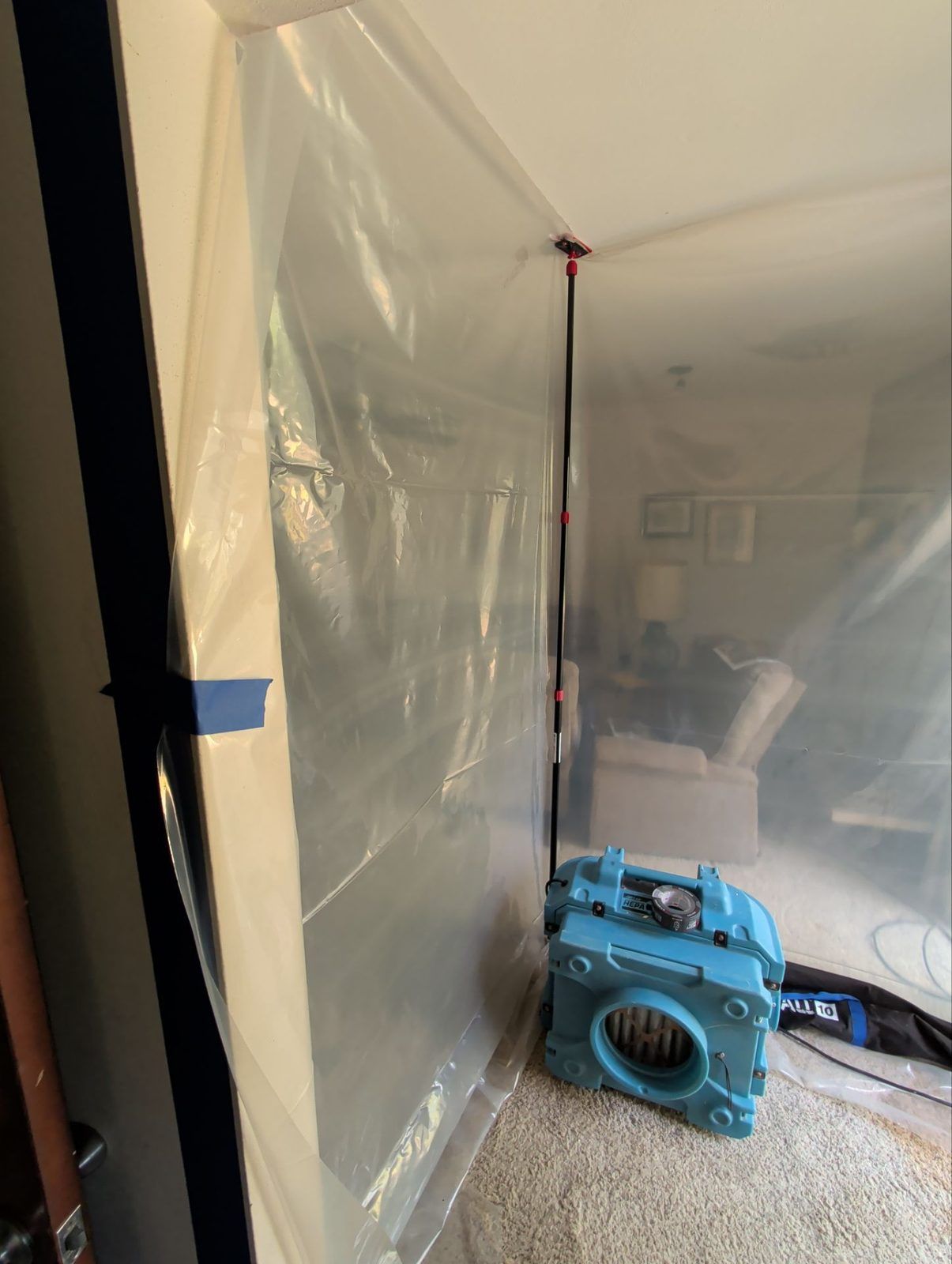
1. We inspect the visible mold and the moisture conditions around it, with moisture meters and a look behind and above the affected area. 2. We protect nearby areas and contents so dust and debris don't travel. 3. We remove materials that can't be saved, such as moldy drywall, insulation, or carpet pad. 4. We clean salvageable hard surfaces and framing. 5. We HEPA vacuum and detail clean the affected area where the job calls for it. 6. We dry the materials and recommend moisture corrections so the mold has less reason to return. 7. We go over next steps with you, whether that means remediation, an inspection, or rebuilding what was removed.
Common Places We Remove Mold
Mold shows up wherever moisture lingers. These are the places we're called to most often.
Bathroom Mold
Showers, tubs, ceilings, and vanities stay damp, and a weak exhaust fan makes it worse. If bathroom mold keeps returning or has reached the drywall, our bathroom mold removal service goes after the moisture behind it.
Basement Mold
Foundation moisture, small leaks, and humidity add up in a basement, and mold often spreads behind finished walls before it's noticed. Our basement mold removal page covers finished and unfinished spaces.
Attic Mold
Roof leaks and poor ventilation leave dark growth on sheathing and damp insulation. See attic mold removal for what causes it and how we clean it up.
Crawl Space Mold
Ground moisture and humidity under the house grow mold on joists and insulation. Crawl space mold removal explains the cleanup and the moisture behind it.
Mold After Water Damage
When materials stay wet after a leak or flood, mold can follow. Our water damage restoration team dries the property, and our mold remediation team handles the mold that came with it, so the two are planned together.
Black Mold Removal Concerns
Black mold gets the most attention, but appearance alone doesn't tell you what you have. Many dark molds look alike, and color can't confirm the species. Whatever the color, dark growth on building materials should be treated with the same care: don't disturb it, don't dry-scrub it, and get it looked at, especially if it's spreading, returning, or covers a large area. Our black mold removal page explains what to do until someone has assessed it and how we handle removal.
Schedule Mold Removal in St. Louis, MO
If visible mold is spreading, returning after cleaning, or growing on drywall, wood, carpet, or other building materials, contact our St. Louis mold removal team. We can inspect the affected area, explain what can be cleaned or removed, and recommend the safest next step. Call (636) 812-3838 any hour. If the extent of the problem isn't clear, a mold inspection can define it before removal begins.