
Professional Mold Remediation for Homes and Businesses in St. Louis
When mold is growing inside your home or business, the real problem is usually bigger than the spot you can see. Our mold remediation team in St. Louis, MO finds the moisture source, contains the affected areas, removes contaminated materials when needed, cleans the surfaces that can be saved, and dries the space so the problem doesn't keep spreading. Sansara 24/7 Restoration & Remodeling is based in Wildwood and serves St. Louis City, St. Louis County, St. Charles County, Jefferson County, Franklin County, and Monroe County, Illinois.
Mold is a moisture problem first and a cleaning problem second. It grows where materials stay damp, so we start by looking for the water: a slow leak, a wet basement wall, a roof that let rain in, or a room that never gets enough airflow. If the mold followed a leak, a flood, or a storm, our water damage restoration team handles the water side of the job, so the drying and the mold work are planned together instead of by two crews working around each other.
You may need mold remediation if you:
See spotting or fuzzy growth on walls, ceilings, trim, or framing
Notice a musty smell that doesn't go away
Found mold after a leak, a flood, or storm damage
Had a home inspection that flagged mold or moisture
Keep cleaning mold that keeps coming back
Not sure what you're looking at? Call (636) 812-3838. We answer any hour, and we'll help you decide whether you need an inspection, testing, or a full remediation plan.
What Mold Remediation Includes
Mold remediation is a controlled process for finding the moisture behind the mold, containing the affected area, removing what can't be saved, cleaning what can, and correcting the conditions that let mold grow. It is not the same as wiping down a stain. A full project can include:
Inspection of visible growth, moisture patterns, and affected materials
Containment to keep dust and spores from moving into unaffected rooms
HEPA air filtration and controlled work practices where the job calls for them
Removal of porous materials that can't be cleaned reliably
Cleaning and treatment of hard surfaces and framing that can be saved
Drying, dehumidification, and moisture correction
Photo and moisture-reading documentation of the work
Not every project needs every step. A small area on a hard surface takes less than a flooded basement with wet drywall and insulation. We scope the work to what we actually find, and we explain what's included before we start.
Mold Remediation vs. Mold Removal
Removal is one part of remediation. Mold removal is about the growth you can see and the materials holding it, such as cleaning a framing member or cutting out a section of moldy drywall. Remediation is the wider plan around that work: finding out why the mold grew, keeping spores out of clean rooms, drying the structure, and documenting what was done. Many jobs need both. If your main concern is visible growth on a wall, ceiling, or piece of wood, our mold removal page explains how we handle it. When the problem involves water damage, hidden moisture, or a larger area, remediation is the more accurate description of the work.
When Mold Remediation Is Required
No single rule fits every property, but these situations usually call for a full remediation plan rather than a quick cleanup:
- Mold covers more than a small area
- Growth is on porous materials like drywall, carpet, insulation, or ceiling tile
- Mold returns after you've cleaned it
- Mold showed up after water damage, flooding, or a sewage backup
- Mold may be inside a wall, ceiling, or floor cavity where you can't see how far it goes
- Someone in the property has asthma, allergies, a chronic lung condition, or a weakened immune system
If any of those apply, don't scrub or scrape the mold yourself. Disturbing it can put spores into the air and spread them to other rooms. Call us, and we'll assess the space before anything is touched.
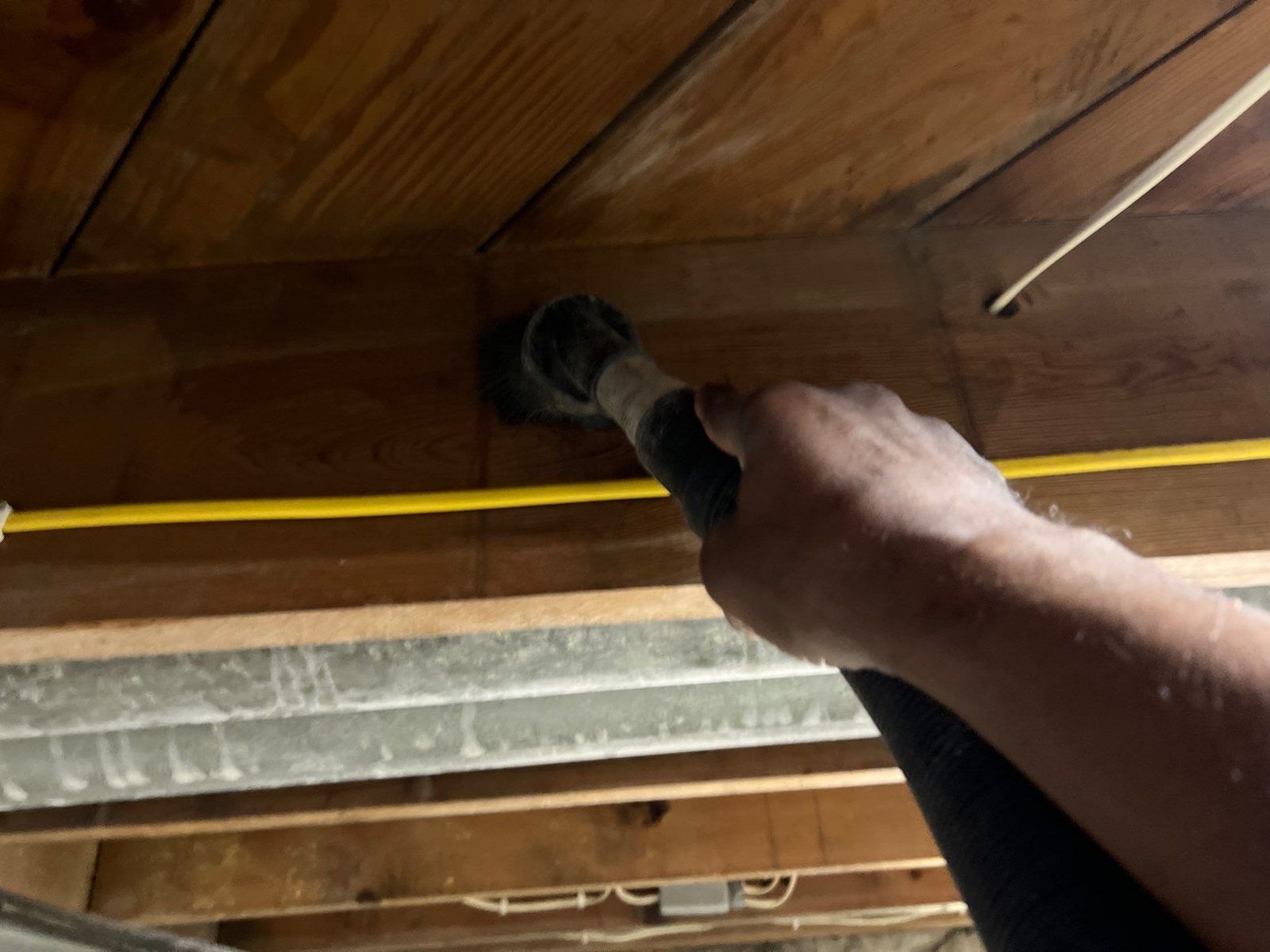
Our Mold Remediation Process
Every property is different, but the sequence stays consistent so nothing gets skipped.
1. Initial assessment and safety review. We walk the affected areas, look at what the mold is growing on, and note anything that changes how we set up, such as standing water, wet insulation, or occupants who need extra care. 2. Moisture source identification. We use moisture meters and thermal imaging to find where the water is coming from or has been, because mold that returns almost always traces back to moisture that was never fixed. 3. Containment and precautions. We isolate the work area to reduce the spread of dust and spores, and if the mold may have reached your heating and cooling system, we tell you to keep it off until it's been looked at. 4. Air filtration. Where the scope calls for it, we run HEPA air filtration during the work. 5. Material removal, cleaning, and treatment. Porous materials that can't be cleaned reliably come out. Hard surfaces and framing that can be saved are cleaned and HEPA vacuumed. 6. Structural drying and humidity control. We dry the area and monitor moisture so the space doesn't become a home for mold again. 7. Final cleaning and documentation. We clean up, record the work with photos and readings, and go over next steps with you. If you or someone else needs post-remediation testing, we plan the work around that.
Mold After Water Damage, Leaks, or Humidity Problems
Mold grows where moisture stays. Given enough dampness and a food source like drywall paper, wood, or insulation, it can start growing when materials stay wet for a stretch after a leak or flood. That is why the most common calls we get come after a plumbing leak, a failed appliance, a roof leak, a wet basement, a humid crawl space, or storm or flood damage.
This is also why cleaning alone doesn't solve it. If the source keeps feeding the area, the mold comes back. Drying and source correction have to happen alongside the cleanup. When water is still an active problem, our water damage restoration team extracts and dries the property, and our structural drying process explains how we get moisture out of framing, subfloors, and wall cavities. Repairing a leaking pipe or fixture is plumbing work, and a plumber may need to do that; we handle the water damage and the mold that came with it.
Safety, Containment, and Indoor Air Protection
The safest approach is to avoid disturbing mold until you know what you're dealing with. Scrubbing, sanding, or tearing out moldy material without protection can release spores and move them through the property.
People with asthma, allergies, chronic lung conditions, or weakened immune systems should stay out of the work area. If you have health concerns, talk with your doctor.
Containment helps keep dust and spores from moving into rooms that weren't affected.
Porous materials such as drywall, carpet, insulation, and ceiling tile may need to be removed, because mold can grow into them where a cleaner can't reach.
If mold may have reached your heating and cooling system, avoid running it until it's been evaluated. Cleaning the ductwork itself is handled through our air duct cleaning service.
Our goal on every job is to remove visible growth from the affected materials, address the moisture conditions, and reduce the exposure of the people in the property. We don't promise a property will be free of every mold spore, because mold is a normal part of the outdoor air. What we can do is clean up the problem, fix the conditions we can control, and tell you what to watch for afterward.
Mold Remediation Cost Factors
We don't post a price chart, because mold jobs vary too much for a number to mean anything before someone has seen the space. These are the factors that move the scope of work:
- The size of the affected area
- Where the mold is and how easy it is to reach
- What the materials are, since hard surfaces are cleaned and porous materials are usually replaced
- Whether demolition, contents cleaning, or rebuilding afterward is needed
- How much drying the space needs and how long that takes
- Whether you want testing or post-remediation sampling added to the project
Estimates are free. We look at the space, take moisture readings, explain what we found, and give you a scope you can compare and question.
Insurance and Documentation for Mold Damage
Whether insurance helps with mold depends on your policy and on what caused it, and that question belongs with your insurance company. Sudden water damage is often treated differently than a long-term leak, chronic humidity, or a maintenance issue, so read your policy language and ask your agent early.
What we can do is document the loss. We photograph the affected areas, record moisture readings, keep notes on the mitigation steps we take, and put together an itemized scope of work. We work with your insurance company on that documentation. We won't tell you what a policy will cover, because we can't know that before your insurer reviews it.
Related Mold Services
Most mold questions narrow down to a specific problem or a specific part of the house. These pages go deeper on each one.
Mold Removal
Visible growth on walls, ceilings, wood, drywall, or carpet, plus what can be cleaned and what has to come out. Our mold removal service is the right place to start if you can see the problem.
Mold Inspection
If you smell mold but can't find it, or you want the extent of a problem defined before work begins, a mold inspection looks at visible growth, moisture patterns, and affected materials.
Black Mold Removal
Dark or black growth worries people more than other mold. Our black mold removal page explains what we can and can't tell from appearance alone, and what to do until someone has assessed it.
Attic Mold Removal
Roof leaks, poor ventilation, and bathroom fans that vent into the attic all feed mold on sheathing and insulation. See attic mold removal for causes and cleanup.
Crawl Space Mold Removal
Ground moisture, humidity, and leaks under the house grow mold on joists, subfloor, and insulation. Crawl space mold removal covers the cleanup and the moisture behind it.
Mold Testing
Air and surface sampling can add information to an inspection. Mold testing explains when sampling helps and what results can and can't tell you.
Basement Mold Removal
Seepage, flooding, and humidity make basements a common place for mold, especially behind finished walls. See basement mold removal for how we handle finished and unfinished spaces.
Bathroom Mold Removal
Shower, ceiling, and vanity mold that keeps returning usually points to a ventilation or leak problem. Bathroom mold removal explains when surface cleaning stops being enough.
Schedule Mold Remediation in St. Louis, MO
If you see mold, smell musty odors, or recently had water damage, contact our St. Louis team for a mold remediation inspection. We will identify the affected areas, explain the scope, and recommend the next step for your home or business. Call (636) 812-3838 any hour, or reach us through our contact page and we'll get back to you.