
Water Leak Detection In St. Louis, MO For Hidden Moisture And Damage
Water that leaks out of sight does its damage out of sight. Sansara 24/7 Restoration & Remodeling provides water leak detection in St. Louis, MO by locating hidden moisture and tracing it toward its source, so you know where the water is, how far it has spread, and what it has damaged. We answer the phone at any hour.
It helps to be clear about what this service is. Here, detection means finding the water damage. Using moisture meters and thermal imaging, we check walls, ceilings, floors, and cabinets, find the wet areas, and follow the moisture back toward where it is coming from. You get a documented picture of the source and the extent of the damage. It is part of a water damage inspection, and it is different from repairing the leak.
After a hidden leak there are three separate jobs, and they belong to different people. The first is locating the leak, which is what we help with. The second is fixing the pipe or fixture, which is plumbing work and not a trade we perform, so a plumber does that. The third is restoring what the water damaged: extraction, drying, cleaning, and documentation, which is our work. Knowing which job you need first keeps you from calling the wrong company first.
We can help when:
A stain, odor, or wet spot has shown up and you do not know why
A floor, wall, or ceiling is damp but nothing is visibly leaking
Water appears at a baseboard, cabinet, or wall base and you cannot see where it starts
A known leak has been fixed and you want to know how far the water went
Signs you may have a hidden leak
Hidden leaks rarely announce themselves. More often they leave small clues that are easy to explain away. Watch for these:
Stains on ceilings or walls, or paint that bubbles, peels, or cracks
A musty smell that comes and goes, especially in cabinets, closets, and basements
Floors that are warped, cupped, or soft in one area
Baseboards or drywall that feel damp or look swollen
The sound of dripping or running water inside a wall
Mold or mildew showing up in a spot with no obvious cause
A water bill that climbs with no change in how you use water
None of these proves a leak. Condensation, high humidity, and roof or window problems can cause similar signs, which is why we take readings instead of guessing. A ceiling stain might come from a supply line above it, a bathroom above it, or the roof, and what you do next depends on which. We cover the ceiling side of that in more detail under ceiling water damage, and warped or cupped boards under hardwood floor water damage.
If your water bill has climbed and you cannot find a reason, check whether your water meter keeps moving when every fixture is off. If it does and there is no damage inside your building, the leak may be underground or under a slab. That is beyond what we do, and the section on plumbers and specialists below explains where to turn.
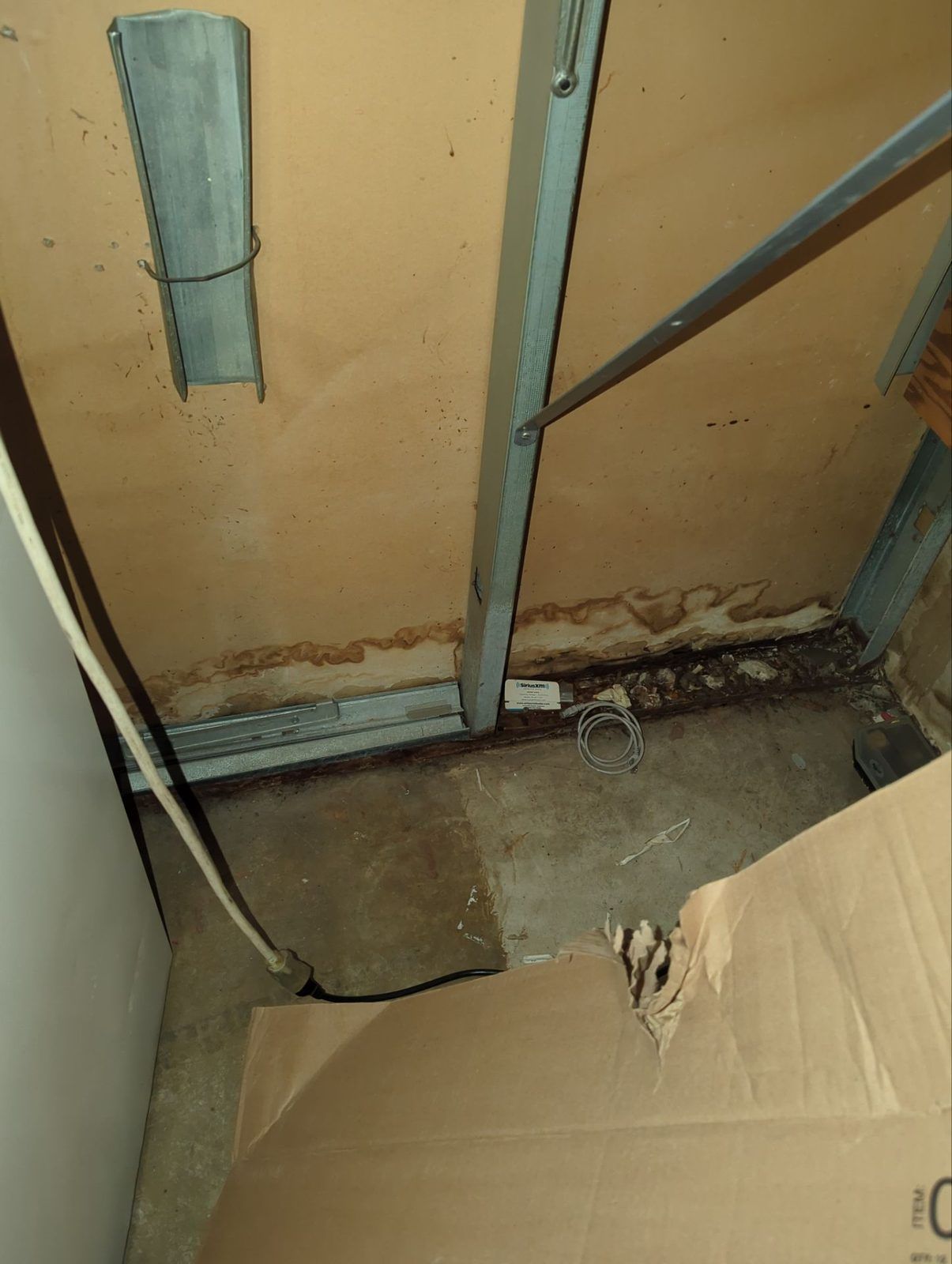
Thermal imaging, moisture meters, and inspection methods
We use several tools together, because each one has limits:
Moisture meters. A pin meter reads moisture inside drywall, wood, and framing. A pinless meter scans a wider area without marking the surface. Readings show how wet a material is and let us compare a suspect area with a dry area nearby.
Thermal imaging. A thermal camera shows surface temperature patterns, and wet materials often look cooler than dry ones, so an image can point to where to look. It does not see water directly, and things like cool air from a vent or thin insulation can look similar, so we confirm what it shows with a meter.
Visual inspection. We look at stains, swelling, the areas around fixtures, cabinet bases, the space below a bathroom, and any attic or crawl space framing we can reach.
Small inspection openings. When readings point to a spot inside a wall or ceiling but cannot settle it, we may suggest a small opening, with your permission, to look at the cavity directly.
Thermal imaging leak detection gets a lot of attention, and it is a useful tool, but the answer comes from reading all of the results together. We record the readings and take photos, and we map where the moisture is so the same points can be checked again as drying begins. That record is also what shows a plumber, an adjuster, or a repair contractor exactly what we found and where.
Plumbing leaks, slab leaks, wall leaks, and ceiling leaks
Where a leak is decides what we can do about it. Here is how we handle each kind:
Plumbing leaks at supply lines, drains, and fixtures. We find the wet materials around a leaking fitting, under a sink, or behind a tub or toilet, and trace how far the water traveled. The pipe or fixture repair goes to a plumber.
Wall leaks. Moisture meters and thermal imaging show which parts of a wall are wet and where the wet area starts. That often narrows the source to a pipe run, a fixture, or an opening in the exterior wall.
Ceiling leaks. We trace a ceiling stain back through the ceiling and the space above it, whether that space holds a bathroom, a supply line, an HVAC line, or the roof. Roof repair is not something we do, so if the trail leads to the roof, you will need a roofer for that part.
Slab leaks and buried lines. Finding a leak in a pipe under a concrete slab or in a buried line takes specialized plumbing or leak-location equipment, and it is not a service we provide. If a slab or buried-line leak has already put water into your building, we handle the water damage.
Being direct about that boundary saves you time. If we cannot find a source with the tools we use, we will say so, rather than guess, and tell you what kind of specialist to call next.
What happens after the leak is found
Once the source is known, the order matters: stop the water, then deal with what it soaked. A plumber repairs the leaking pipe or fixture. If it is a supply line, the water to that line gets shut off first. Ours is the water damage.
Our water mitigation work starts as soon as the water is under control. We remove standing water if there is any, and we take out materials that cannot be dried, such as saturated carpet pad, wet insulation, and sometimes drywall. We then place air movers and dehumidifiers based on the moisture readings and check those readings as the materials dry. Our structural drying work goes into more detail on walls, floors, and cabinets, and it continues until the readings show a normal, dry level.
We also document the whole job. Photos, moisture readings, drying records, and an itemized scope show where the leak was traced, how far the water spread, and what it damaged. That record helps your plumber, your insurance company, and anyone doing repairs. A leak that ran for a long time can leave visible mold behind, and mold needs its own evaluation, which our mold remediation services can provide.
When a plumber or specialist is required
Most leaks that cause water damage end with a plumber, and it is better to say that plainly. We do not repair pipes, fixtures, or supply lines. You need a plumber when:
A pipe, fitting, valve, or fixture is leaking or has failed
Your meter keeps moving with every fixture off, but there is no damage inside
The leak is inside a slab or in a buried line
A water heater, appliance connection, or drain is the source
You may need other specialists too: a roofer if the trail leads to the roof, an HVAC technician if a condensate line is the source, or a waterproofing contractor if water is entering through a foundation. We do not perform those trades either. What we handle is the water damage each of them leaves behind, and it is all part of our water damage restoration work. When you call, tell us what you already know about the source, and we will tell you plainly whether your next call should be to a plumber, to us, or to both.
The two jobs work best when they happen together. The plumber fixes the source while we document, extract, and dry so the damage does not keep growing. Share the plumber's findings with us, and we will share our moisture readings with them and with your insurance company if you would like us to.
Call Sansara 24/7 Restoration & Remodeling for leak detection in St. Louis, MO
Call Sansara 24/7 Restoration & Remodeling for Water Leak Detection in St. Louis, MO at (636) 812-3838. We answer 24 hours a day. If you have a stain, a smell, or a damp spot and want to know what is behind it, we will come look with moisture meters and thermal imaging and tell you what we find.
If it is not urgent, you can request a water damage inspection through our contact form. Tell us what you have noticed, where, when it started, and whether water is still active, and we will follow up. We are locally and family owned, based in Wildwood, and estimates are free. We serve homes and businesses across St. Louis City and County, St. Charles County, Jefferson County, Franklin County, and Monroe County, Illinois.