
Professional Black Mold Removal for Homes and Businesses in St. Louis
Finding dark or black growth on a wall, ceiling, or piece of wood is unsettling, and people often want it gone that day. The better first move is to leave it alone until someone has assessed it. Our black mold removal team in St. Louis, MO looks at the visible growth, finds the moisture source, contains the affected area, removes contaminated materials, and cleans what can be saved. Sansara 24/7 Restoration & Remodeling is locally and family owned, based in Wildwood, and we answer the phone any hour.
Here's the plain version of what we know. Many dark molds look alike, and color alone doesn't tell you which one you have. What matters for the property is the same in every case: the growth is on building materials, it is there because moisture has been present, and disturbing it the wrong way can spread it. Our job is to deal with all three. We remove the growth from affected materials, fix or flag the moisture conditions behind it, and explain the scope before we start.
People reach out to us about dark mold on bathroom ceilings, on basement walls, behind furniture, in closets, along window frames, and on attic sheathing. If it followed a leak, a flood, a sewage problem, or a roof leak, tell us when you call, because that history changes how we set up the work.
What to Do If You Find Suspected Black Mold
What you do in the first few hours can keep the problem from getting bigger. Here is what we recommend:
Don't disturb it. Don't scrub, scrape, sand, or dry-brush the growth, and don't spray it with cleaners you haven't researched. Disturbing dry mold can put spores into the air.
Keep people out of the room. Close the door, and keep children, pets, and anyone with asthma, allergies, a chronic lung condition, or a weakened immune system away from the area.
Turn off the moisture if it's safe. If there's an active leak, shut off the water to it. Running fans or the heating and cooling system in the area can spread dust, so avoid that until it has been looked at.
Document it. Take photos, and write down when you first noticed it and any leaks, floods, or storm damage you remember.
Call a professional. We can assess the area, explain what we found, and recommend the next step.
We don't diagnose health issues. If anyone in the home has symptoms they're worried about, talk with a doctor.
What Black Mold Removal Includes
Black mold removal follows the same disciplined process as any mold remediation project, with extra attention to keeping the growth from being disturbed or spread. Every step is planned around what we find, so a spot on a bathroom ceiling and dark growth across a basement wall get different scopes. During the work, the affected area is sealed off from the rest of the property, and you can usually keep using the parts of the home that weren't affected. If belongings are near the growth, we can talk through moving them, and our pack-out services can inventory, pack, and clean contents when a larger project calls for it. A full project can include the steps below.
Inspection and Moisture Source Review
We look at where the growth is, how far it extends, and what materials it's on. We use moisture meters to check the surrounding materials and look for the water that fed the mold: a leak, condensation, seepage, or a flood that never fully dried. Without that step, removal is only a temporary fix.
Containment
Before we touch the growth, we isolate the work area to reduce the spread of dust and spores into the rest of the property. That keeps the cleanup from carrying the problem into rooms that were clean when we arrived.
HEPA Filtration
Where the scope of the job calls for it, we run HEPA air filtration during the work and use HEPA vacuums to clean the area. HEPA filtration captures very fine particles, which is what makes it useful during mold cleanup.
Removal of Contaminated Porous Materials
Drywall, insulation, carpet, carpet pad, and ceiling tile can't be cleaned reliably once mold has grown into them. We remove those materials, bag them to limit the spread, and take them out of the property.
Cleaning Salvageable Surfaces
Solid surfaces such as framing, concrete, tile, and sealed wood can often be cleaned and HEPA vacuumed rather than replaced. We clean these surfaces carefully and check them before we move to the next step.
Drying and Prevention
Once the growth and the contaminated materials are gone, we dry the area and check moisture readings so the space isn't left damp. We also tell you what we found behind the problem, such as a leak that needs a plumber or a ventilation issue, so you can fix the cause. We can't promise mold will never return, but drying and moisture control are what reduce the chance.
Black Mold on Drywall, Wood, Ceilings, and Floors
The material the mold is on decides how we handle it. On drywall and ceiling material, mold grows into the porous paper face and the core, so affected sections usually need to be cut out and replaced. Wood framing and joists can often be cleaned, HEPA vacuumed, dried, and treated when they are solid, and we'll tell you if wood looks soft or damaged enough that someone qualified should assess it.
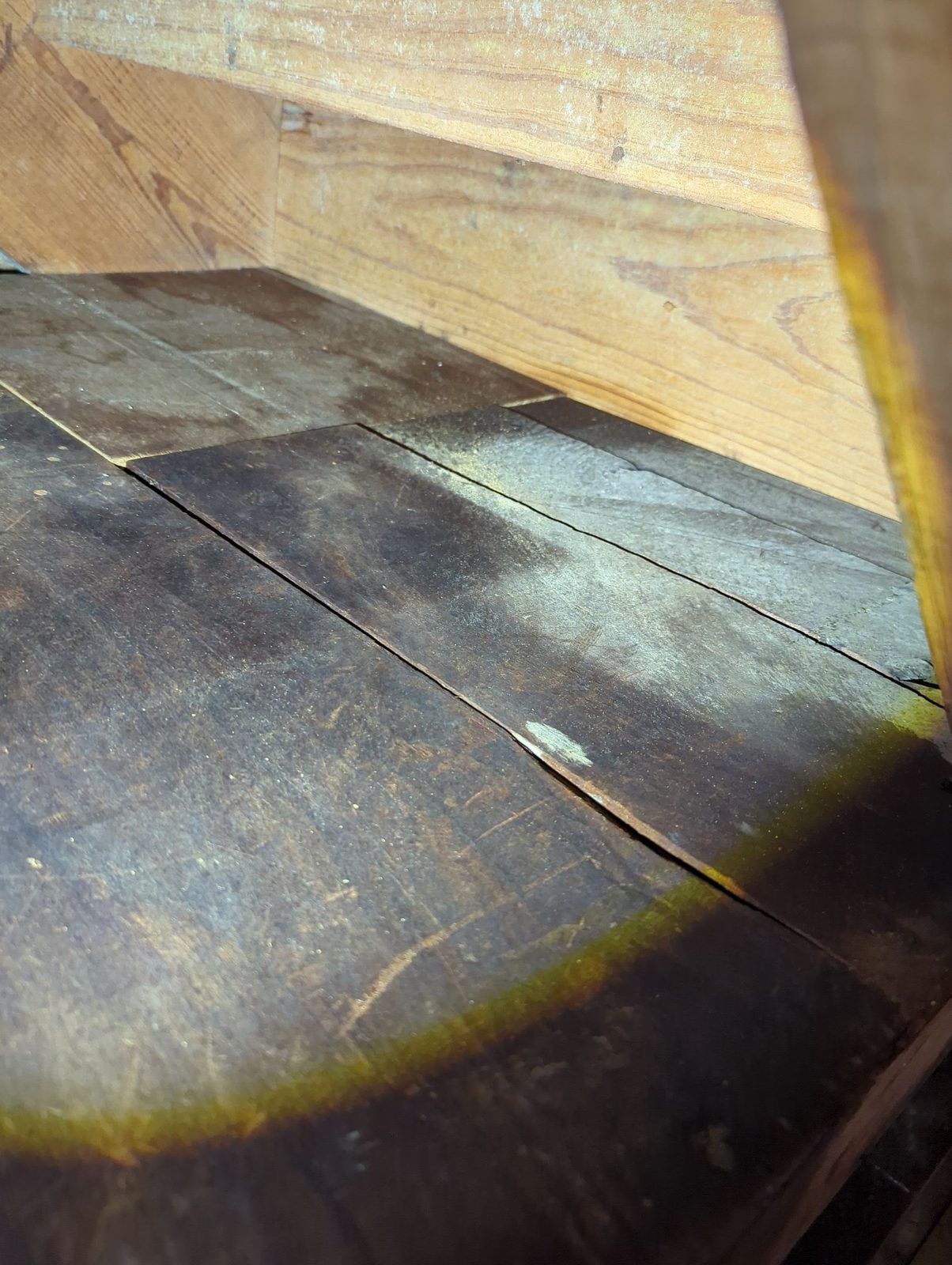
Keep in mind that the dark spot on the surface is sometimes only the part you can see. Growth that shows on the face of a wall may extend into the cavity behind it, especially after a leak or flood. When we open a wall or ceiling, we work back to clean, dry, solid material, so we're not leaving growth behind the patch. You'll see what we found, and we photograph it as we go.
On floors, carpet and pad that have grown mold are typically removed, while concrete and sealed hard surfaces can usually be cleaned. Dark growth on a bathroom ceiling often points to condensation or a leak above, so we look at the source as well as the stain. If the growth is in a bathroom or basement, our bathroom mold removal and basement mold removal pages cover those spaces in more detail. Once the area is dry and clean, the materials we removed can be rebuilt as part of the same project.
Inspection, Testing, and Verification
Some people want to confirm what they have before any work begins. A mold inspection looks at the visible growth, the moisture conditions, and the materials involved, and it results in a plan. Mold testing goes a step further and can add sample data, which may help document conditions.
Two things are worth knowing. First, sampling doesn't replace a moisture fix: visible dark growth on building materials needs to be dealt with whatever a sample shows. Second, we don't promise that a sample will identify a specific species, and we don't treat results as health conclusions. If you're deciding whether to test, we'll give you an honest answer about whether it's worth adding to your situation. After the work, we photograph and record moisture readings, and if you or someone else wants post-remediation sampling, we plan the work around that.
Get Help With Black Mold in St. Louis, MO
If you've found dark growth, leave it undisturbed and call us. We'll assess the area, look for the moisture behind it, and explain what removal would involve for your home or business. If the growth followed a leak, a flood, a sewage problem, or a roof leak, tell us that too. Call (636) 812-3838 any hour, and we'll talk you through the safest next step.