
Water Damage Inspections In St. Louis, MO That Find Hidden Moisture
Water damage is not always visible. A ceiling stain may be the only sign of water that has soaked a wall, and a floor that looks fine can be wet underneath. Sansara 24/7 Restoration & Remodeling provides water damage inspections in St. Louis, MO for visible leaks, hidden moisture, stains, warped flooring, wet drywall, ceiling damage, basement water, and post-flood concerns.
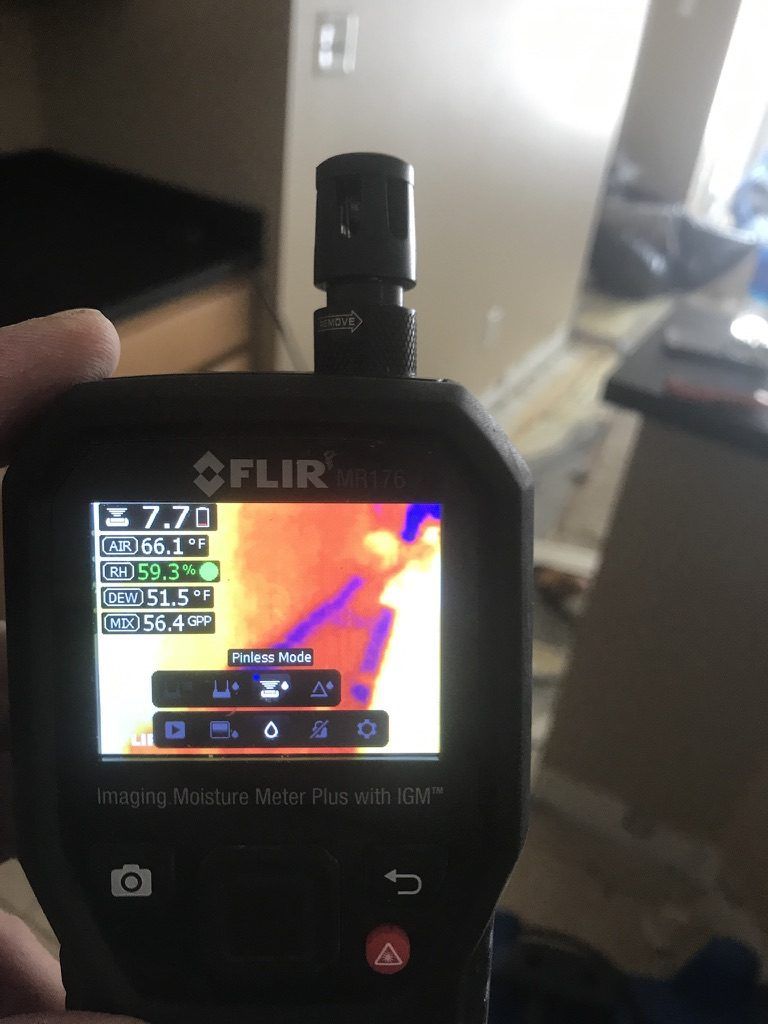
A technician walks the property, takes moisture readings, uses thermal imaging to spot water behind surfaces, photographs what we find, and explains what it means: what is wet, how far the water has spread, whether anything is unsafe, and what we recommend. The inspection is the first step of water damage restoration, and it is what the drying plan is built on.
If you know you have a problem, or only suspect one, call (636) 812-3838. We answer 24/7, and you do not need to be sure it is serious before you ask us to look.
When to schedule an inspection
Schedule an inspection when you notice any of these signs, or when water has been in your property and you are not sure it dried completely:
A brown or yellow stain on a ceiling, or a ceiling that sags or bubbles, which our ceiling water damage work deals with directly
Flooring that is cupping, buckling, or lifting, including hardwood, which we cover in hardwood floor water damage
Paint that peels or bubbles, wallpaper that lifts, or drywall that feels soft
A musty smell in a room, closet, or basement that does not go away
Baseboards or cabinets that swell or separate
A wet spot on a floor or wall that returns after you dry it
A past leak, appliance failure, or basement flooding that you dried yourself
Time matters. Moisture inside a wall does not go away by itself, and materials that stay wet break down. Inspecting early tells you whether you have a small problem that needs some drying or a bigger one that needs a full plan, and it gives you a record of the property's condition from the start.
When you call, it helps to tell us what happened and when, where you noticed the damage, whether water is still active, what the flooring is, and whether you can see any mold. Photos of the damage on your phone are useful too. If water is still running, we will walk you through shutting it off before anything else.
What technicians check during the assessment
Every inspection looks at the same core questions: where the water came from, where it went, and what it touched. In practice that means we check:
- The source and the path the water took through the building
- Affected materials, including drywall, insulation, flooring, subfloor, cabinets, trim, and carpet pad
- Moisture levels in each material, measured with a moisture meter rather than judged by touch
- Where the wet area ends, so the work is limited to what needs it
- The type of water involved, since clean, gray, and contaminated water are handled differently
- Safety concerns, such as water near wiring or a ceiling holding water
- Signs of mold or long-term dampness
We do not stop at the room where you saw the stain. Water moves, so we also check the rooms next to it, the floor above and below, and the spaces you cannot easily see, such as a crawl space, the underside of a subfloor, or the back of a cabinet. We ask you about the history too: when the leak started, what you have already done, and whether the same spot has been wet before. That context often explains what the readings show.
Finding the source is part of an inspection, but it is not the same as locating a hidden pipe leak. If your question is where a leak is coming from, our water leak detection work focuses on that. The repair of a pipe or fixture is plumbing work that we do not perform, so it goes to a plumber, and we handle the water damage that resulted.
Photos, moisture readings, and documentation
We document what we find so that you do not have to rely on memory or guesswork later. During an inspection we take photos of the affected areas, record moisture readings at each location we test, and write up notes on which rooms and materials are wet and what work we recommend.
The readings matter as much as the photos. They give the job a starting point, so we can show how much drier things have gotten at each visit. They also become the baseline for the drying plan in our structural drying work, where we track the same locations until the materials reach normal levels.
This record is yours to share. If you are dealing with an insurance company, the photos, readings, and notes give you organized information to bring to that conversation, and we work with your insurance company by providing it and answering questions about what we found. We cannot say whether your policy covers the loss, and we do not promise that a claim will be approved. That is a question for your insurer.
Hidden water damage and thermal inspection
Most water damage is hidden. It sits behind drywall, under flooring, above ceilings, inside cabinets, and in insulation. That is why an inspection is more than a visual check, and why we use thermal imaging alongside moisture meters.
A thermal camera shows differences in surface temperature. Wet materials often read cooler than dry ones around them, because moisture cools as it evaporates, so a thermal image can point to a wall, ceiling, or floor that needs a closer look. It lets us scan large areas quickly and without opening anything up.
A thermal camera does not measure moisture, and it cannot see through walls. So we treat what it shows as a map of places to test. We confirm those spots with a moisture meter, take readings at several points, and only then decide what is wet. The camera finds the questions, and the meter provides the answers. We also compare readings against a dry area of the same material in your property, so the numbers mean something for your home and not only for a chart.
Together these tools can find water that has spread well beyond the stain you noticed, or show that an area that worries you is dry. If we see signs of mold during an inspection, we tell you, and our mold remediation team can handle it separately. A mold inspection can help you understand what is present before you decide what to do.
Next steps after the inspection
After the inspection we go through what we found with you in plain terms. If the property is dry, we tell you so, and you have a record showing it. If there is moisture, the next step is a plan.
That plan usually starts with water mitigation to stop the damage from spreading. It may include water extraction if there is standing water, followed by drying and monitoring, and cleanup of anything that had to come out. When materials are removed, we can talk with you about repair and rebuild through our reconstruction services, or you can bring the documentation to a contractor of your choice.
You will know what we recommend and why before we start work, and we offer free estimates. If you decide to wait or to use another company, the inspection record is still yours to keep. The plan for the rest of water damage restoration follows from what the inspection finds.
Call Sansara 24/7 Restoration & Remodeling for a water damage inspection in St. Louis, MO
If you suspect water damage in your home or business in St. Louis, MO, do not wait for it to show itself. Call Sansara 24/7 Restoration & Remodeling for a water damage inspection. We check with moisture meters and thermal imaging, document the results with photos and readings, and tell you what we recommend.
We are locally and family owned, based in Wildwood, and fully insured, and we answer every call at any hour. Call (636) 812-3838, or use our contact form to request an inspection if the situation is not an emergency.